Spectacular, Sensorial CDMX
To visit Mexico City is to have your senses firing on all cylinders, the world suddenly several notches brighter, louder, richer.
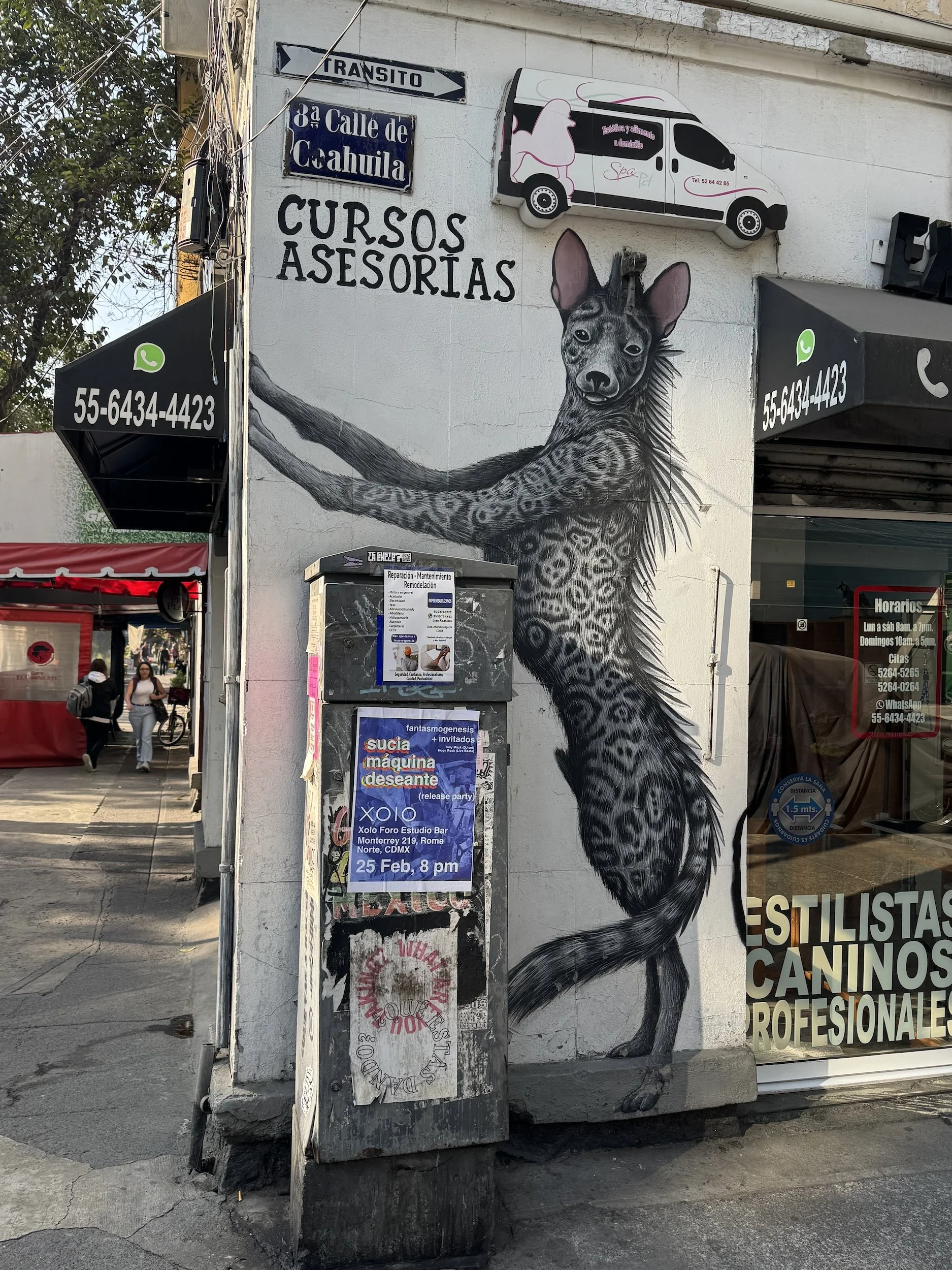
CDMX is a colorful, chaotic, magnetic place—a true sensory extravaganza. I felt it everywhere: in the strains of organ grinders and the cries of tamale vendors; in the aromas and flavors of tacos and tlacoyos sizzling on street corners; in smoky mezcal, tangy micheladas, and rich, complex moles; in bustling mercados, monumental frescoes, and striking street art.
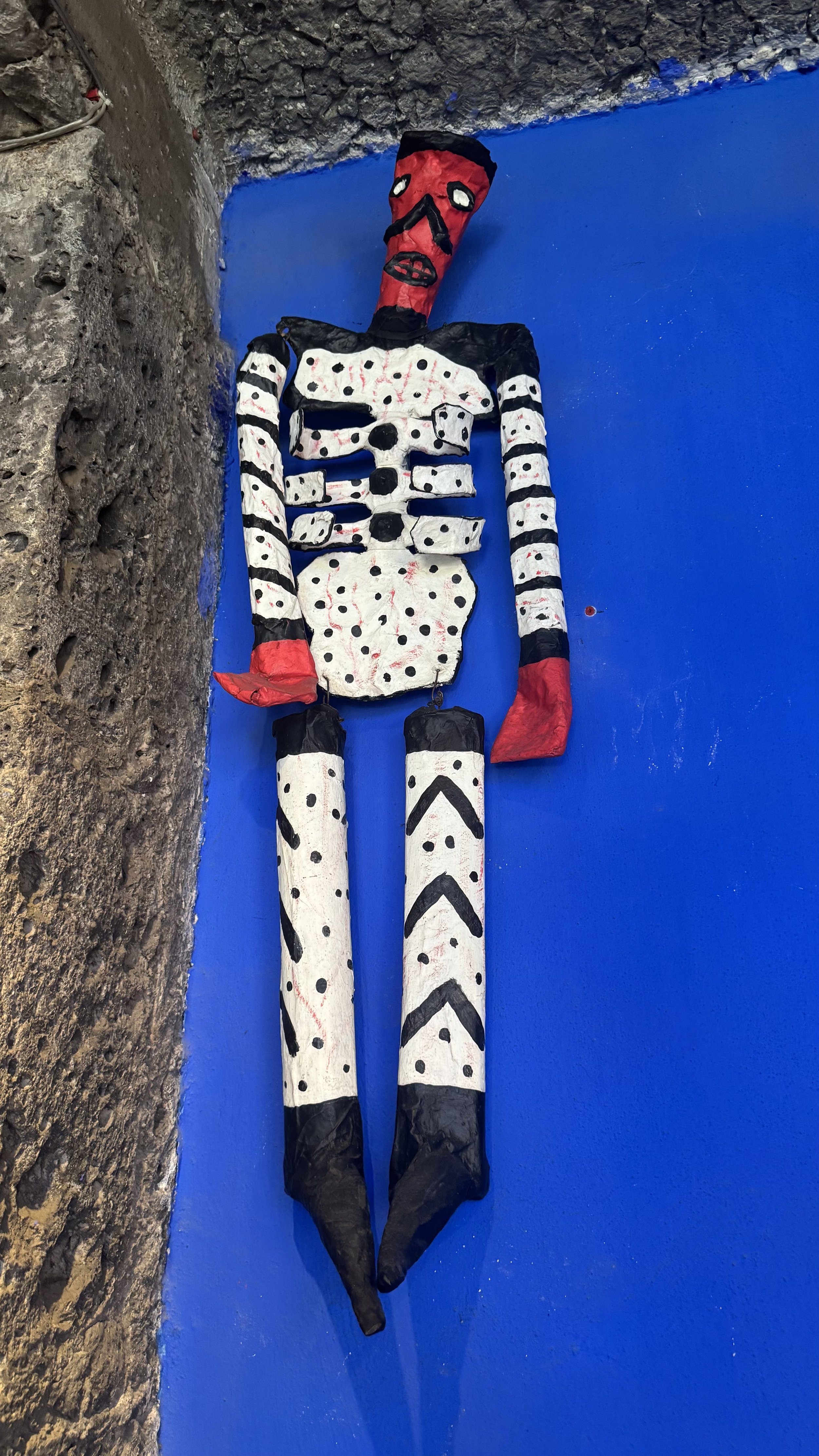
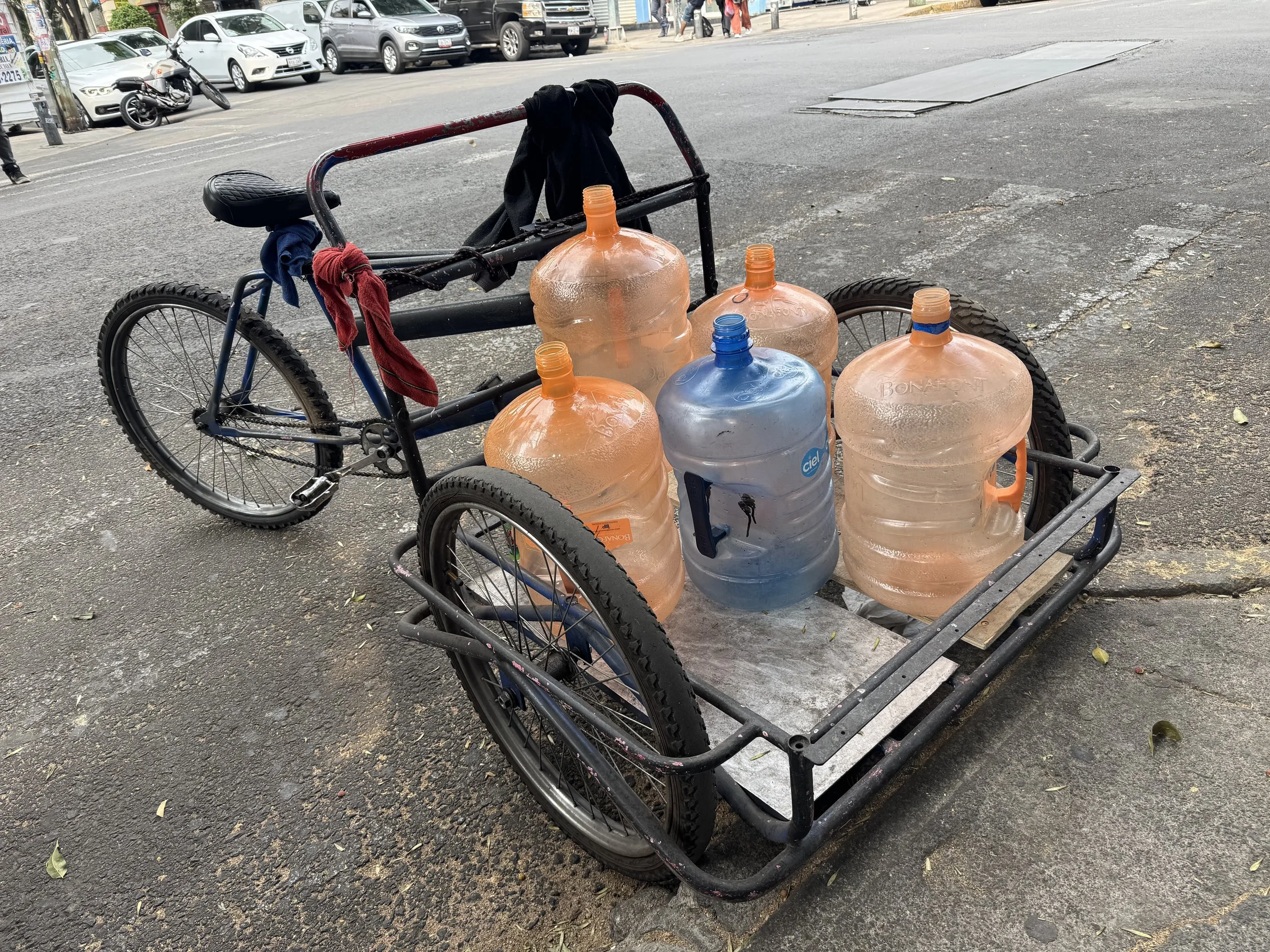
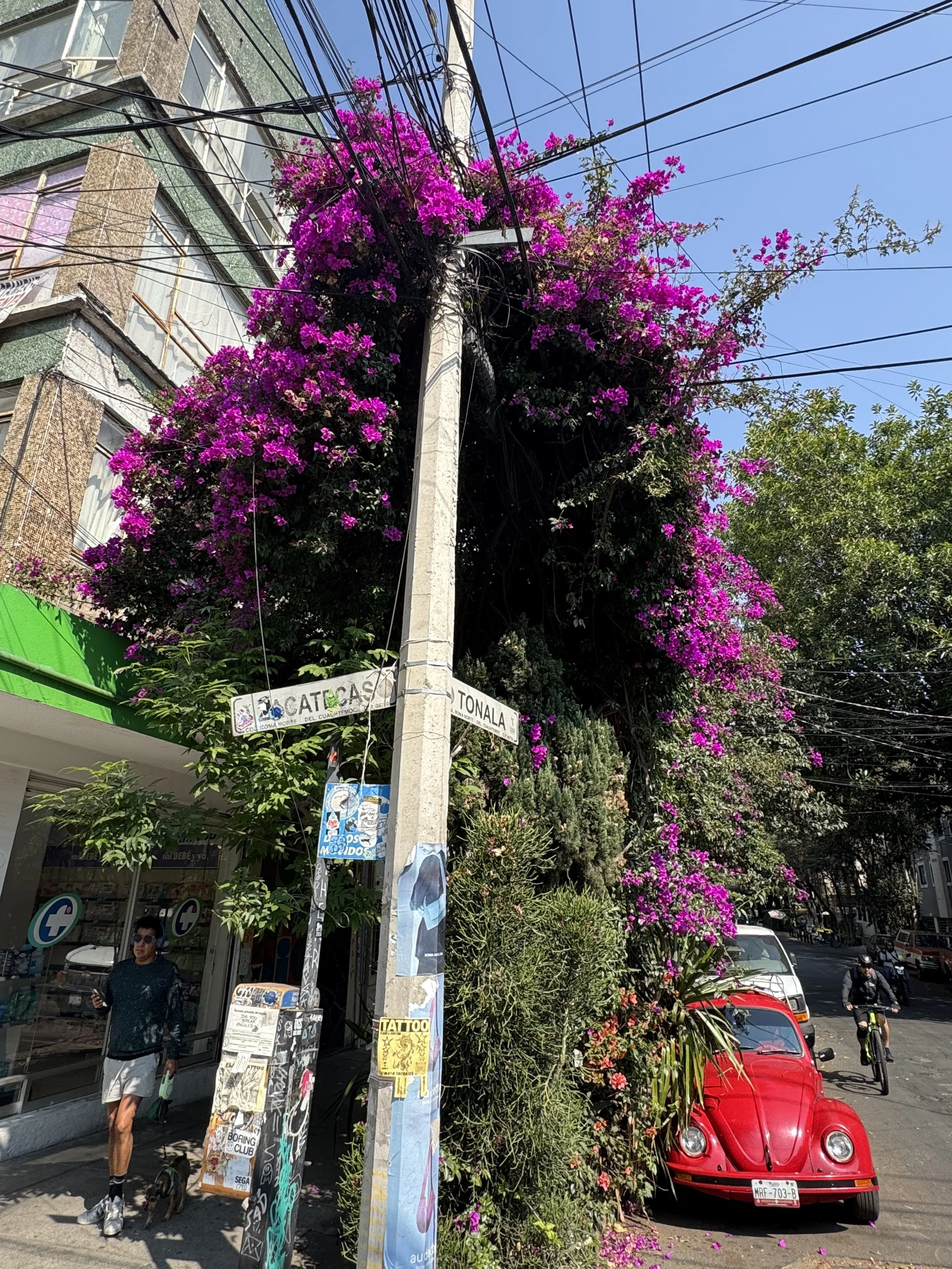
I saw it in brightly colored signs and painted facades; in the ubiquitous translucent orange water jugs, known as garrafones, stacked and carted all over town; and in the violet blossoms dripping from jacaranda trees. Color at every turn.
I felt it at Arena México during a Lucha Libre match, hunting for vintage treasures at La Lagunilla, and in the crowds of Centro Histórico.
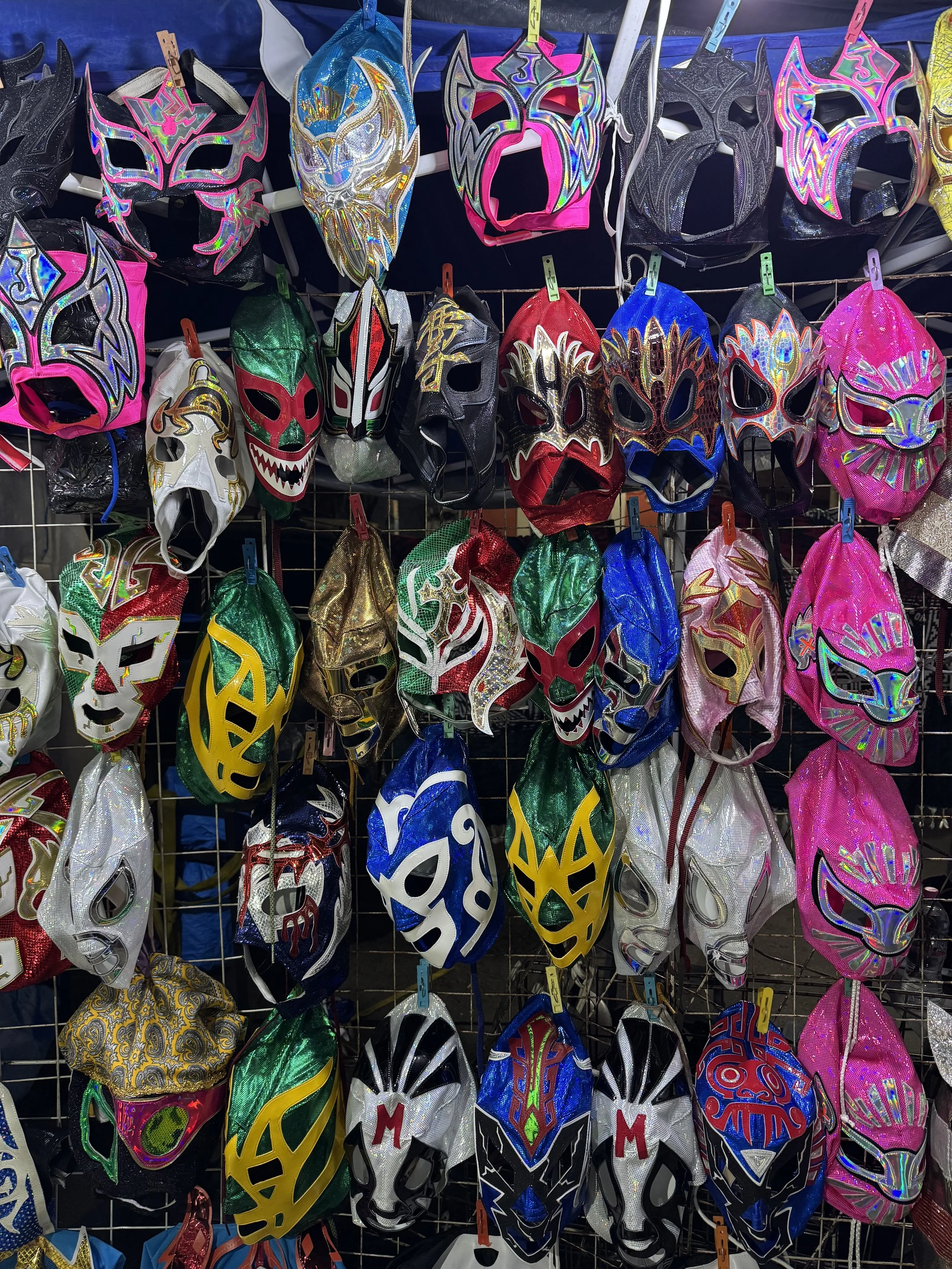
It was in the crunch of my first fried grasshopper. The riot of flowers at Mercado Jamaica. The madcap mayhem of Museo del Juguete Antiguo México. Even stuck in traffic—oh, that legendary Mexico City traffic!—as Mexican music poured from the radio.
There are plenty of calm corners in CDMX, no question—but overall, this city pulses with life; it grabs hold of you, pulls you into its rhythm, and shifts your perspective.
I traveled to Mexico City alone to explore freely, wander widely, and follow my instincts for nearly nine days—guided by my heart, soul, and an insatiable appetite for tacos. My intention was simple: to step away from the familiar and move through a city so dynamic, layered, and culturally rich that nearly every moment felt like discovery. As a first-time visitor, I was in a near-constant state of wonder.
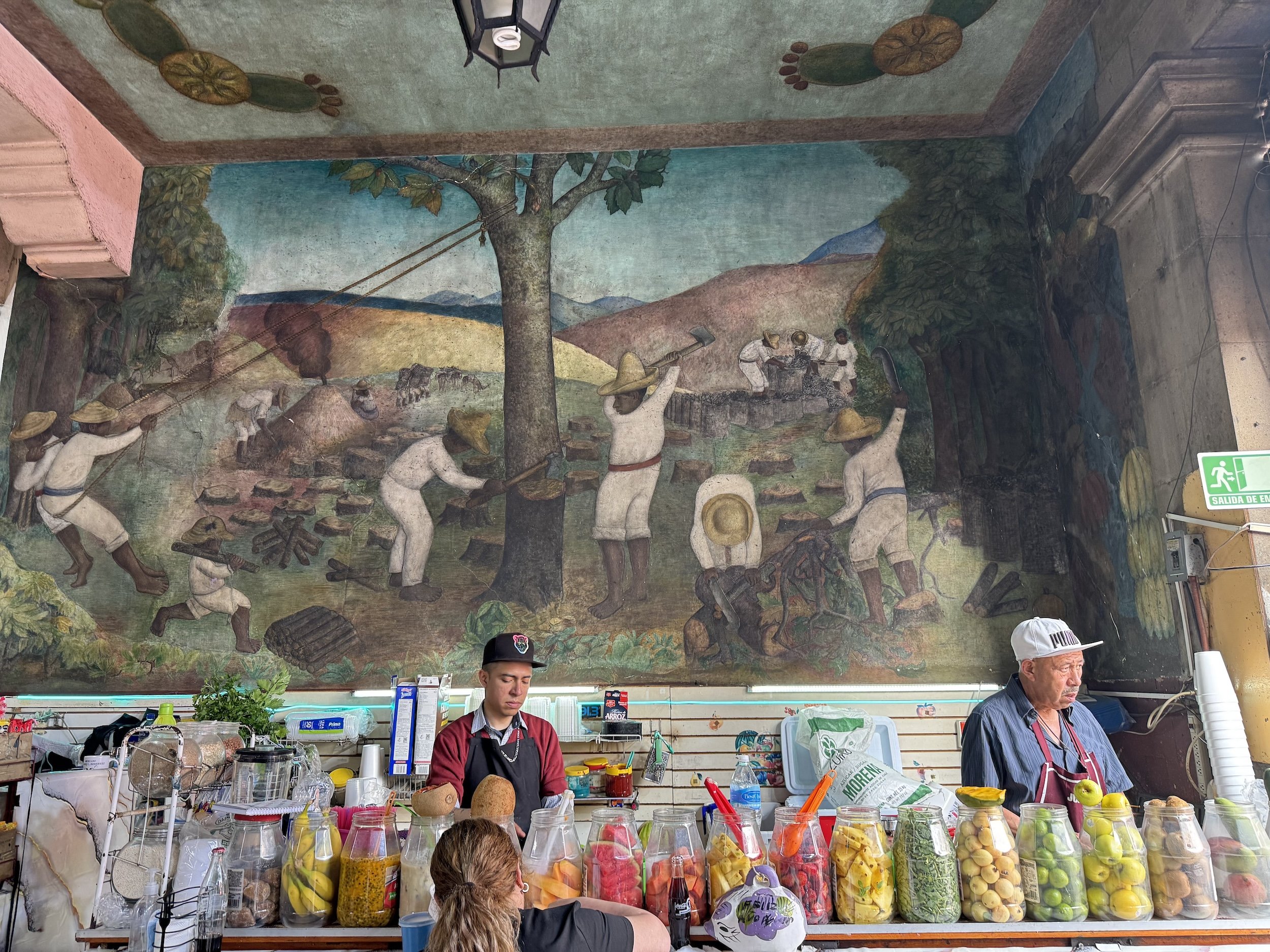
With a population of 26 million, CDMX is one of the ten largest metropolitan areas in the world. It was overwhelming, as expected, but otherwise, nothing like I imagined. I was constantly surprised: by the breadth and caliber of the museums; by phenomenal bakeries and Michelin-rated restaurants; by lovely, leafy neighborhoods and parks; by the vibrant art and design scene; by elegant Art Deco and modern architecture; and by the city’s remarkable authenticity and affordability.
In a city of this scale, you may be inclined to rush, to cram, to see as much as possible. My advice. Don’t. Pace yourself. Allow the city to unfold and reveal itself, layer by layer.
CDMX will astonish you.
5 Favorites
Beyond the Must-Sees
Casa Azul, Lucha Libre, and Museo Nacional de Antropología are must-sees in CDMX—and for good reason. If you’re planning a trip, they’re likely already on your list.
But it’s the next layer—the lesser-known places—that can make your visit even more meaningful. Some are obscure, some slightly out of the way—but each is authentic, distinctive, and profoundly enriching.
Museo Nacional de Antropología, for instance, is grand and magnificent—but Museo Anahuacalli, Diego Rivera's museum of pre-Hispanic art, offers a more contemplative and nuanced experience, and it moved me more deeply. CDMX is home to many exceptional museums, yet the Museo del Juguete Antiguo México—the toy museum—stands entirely apart: wild, rambling, and wonderfully unexpected. There’s certainly nowhere else like it.
Some of my richest experiences came from five places that don’t make the usual itineraries. Each felt genuinely special, offering a unique window into the life, culture, and spirit of Mexico City.
5 Favorites
Museo del Juguete Antiguo México
(The Toy Museum)
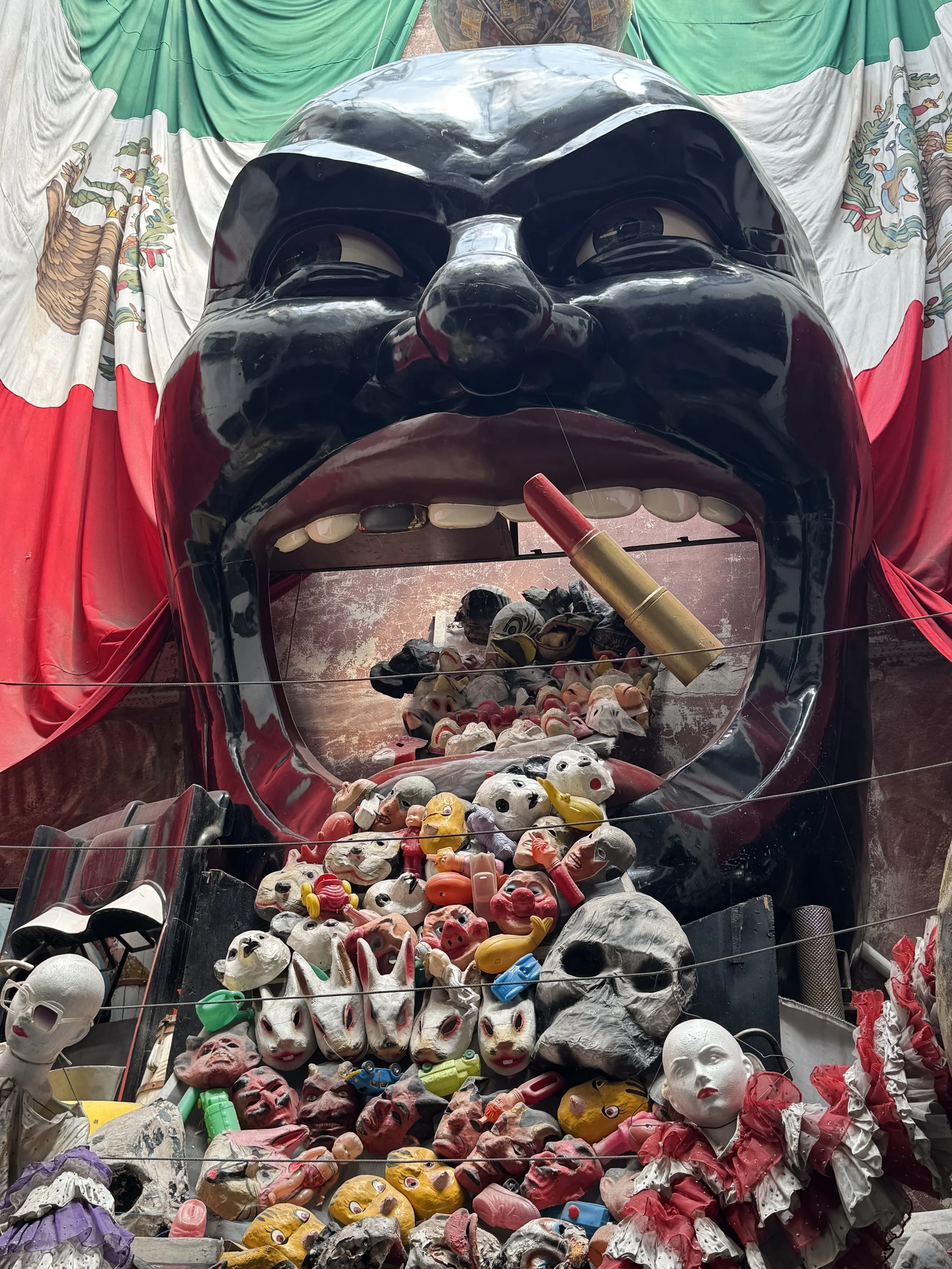
Museo del Juguete Antiguo México (MUJAM) is a toy-lovers fever dream. Mexico City’s awesomely unhinged shrine to play is jam-packed with tens of thousands of toys spanning the 19th through the late 20th centuries.
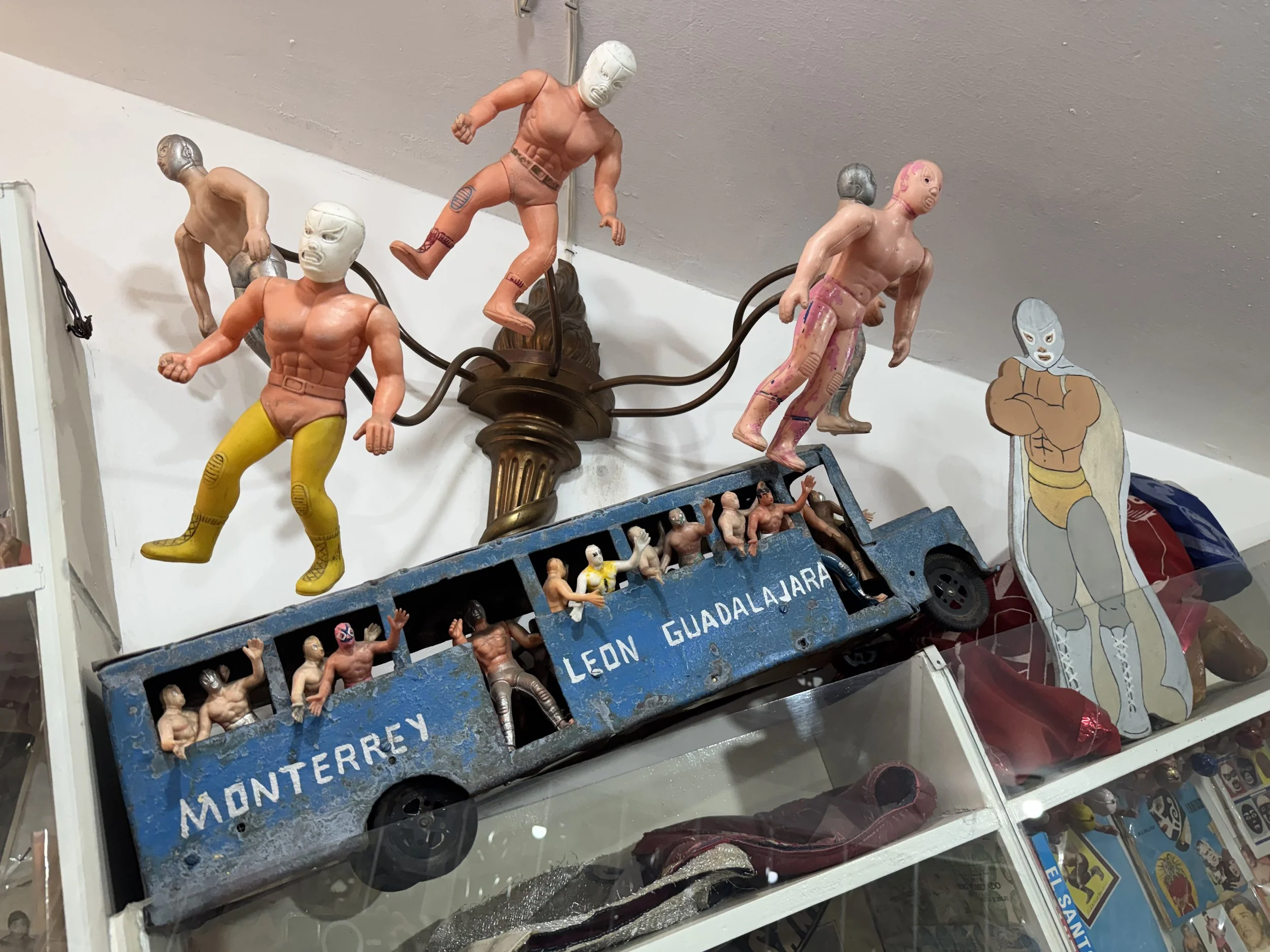
The sheer quantity of toys crammed into four floors of an old apartment building is astounding. There aren’t just a handful of Barbies, a sampling of Snoopys, or a dozen Lucha Libre figures, but hundreds of each. A cluster of old wooden foosball tables fused together. Vitrines filled with plastic figurines.

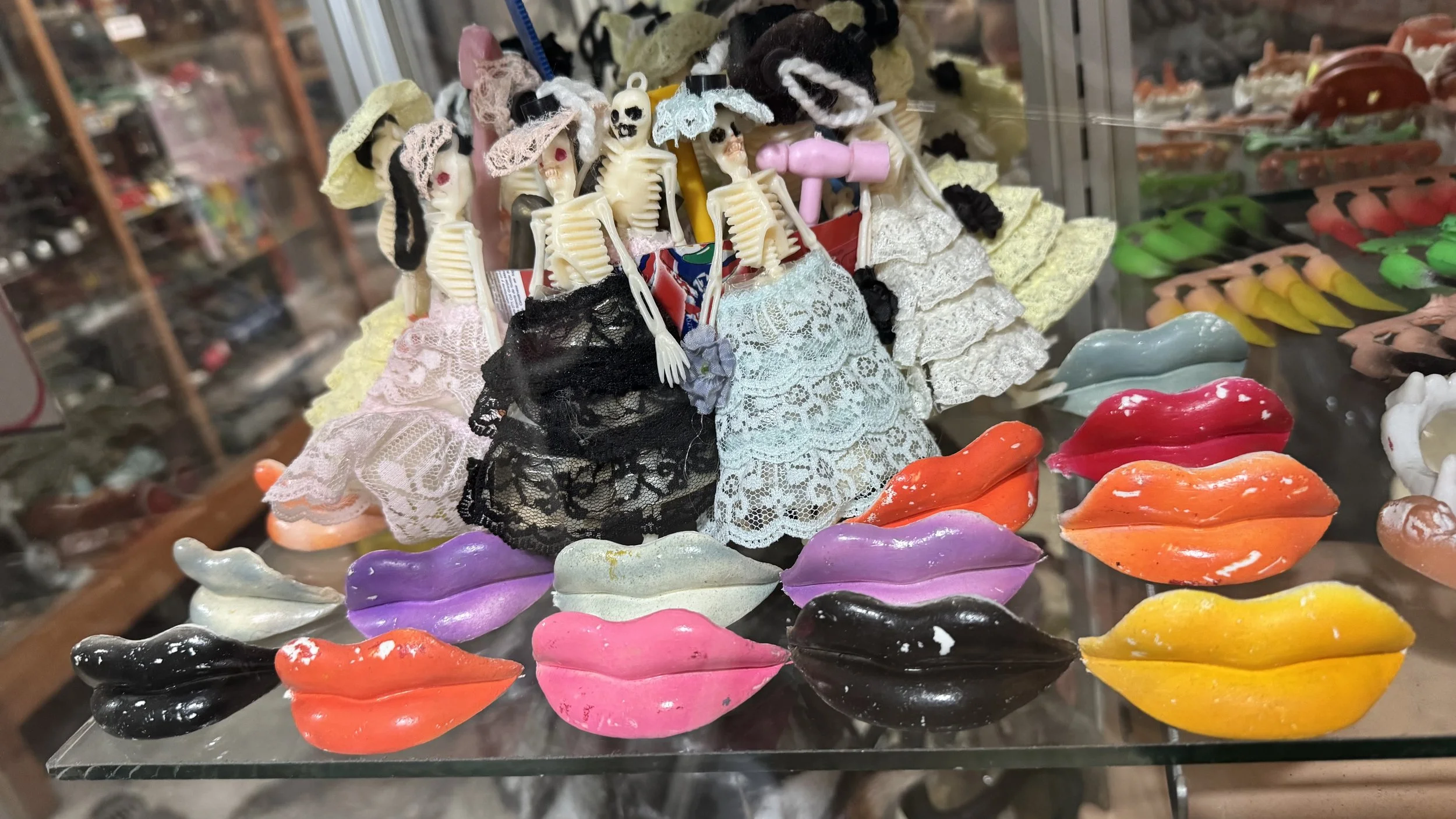
MUJAM is a mind-boggling maze and time warp of toys—you never know what’s around the bend. I couldn’t help but smile when I spotted a display of plastic fangs and wax lips—novelty items I remembered fondly from childhood. The Matchbox cars sparked a rush of memories. The space-age toys from the ‘50s are fantastic. Whatever your age, the nostalgia hits hard.
Beyond the toys, the building itself is a total trip. Every wall—even the roof—is covered in murals by local and international street artists.
Don’t expect anything remotely close to a traditional museum-going experience here. Just wander, wide-eyed, and marvel at the strangeness of the place.
MUJAM is a mash-up of history museum, warehouse, funhouse, street art gallery, cabinet of curiosities—and a window into one collector’s magnificent obsession. You won’t see anything like it anywhere else in the world.
Keep in mind:
* MUJAM is one of the few Mexico City museums that is open on Mondays.
* Give yourself at least a couple of hours to do the museum justice.
* Head to the roof for street art and neighborhood views.
* The gift shop is worth a look for its vintage toys and reproductions.
Museo Anahuacalli
One of my most memorable museum-going experiences ever. Museo Anahuacalli houses Diego Rivera’s collection of pre-Columbian art in a magnificent building in Coyoacán, about 20 minutes by car from the town’s most famous destination, Casa Azul (the Frida Kahlo Museum).
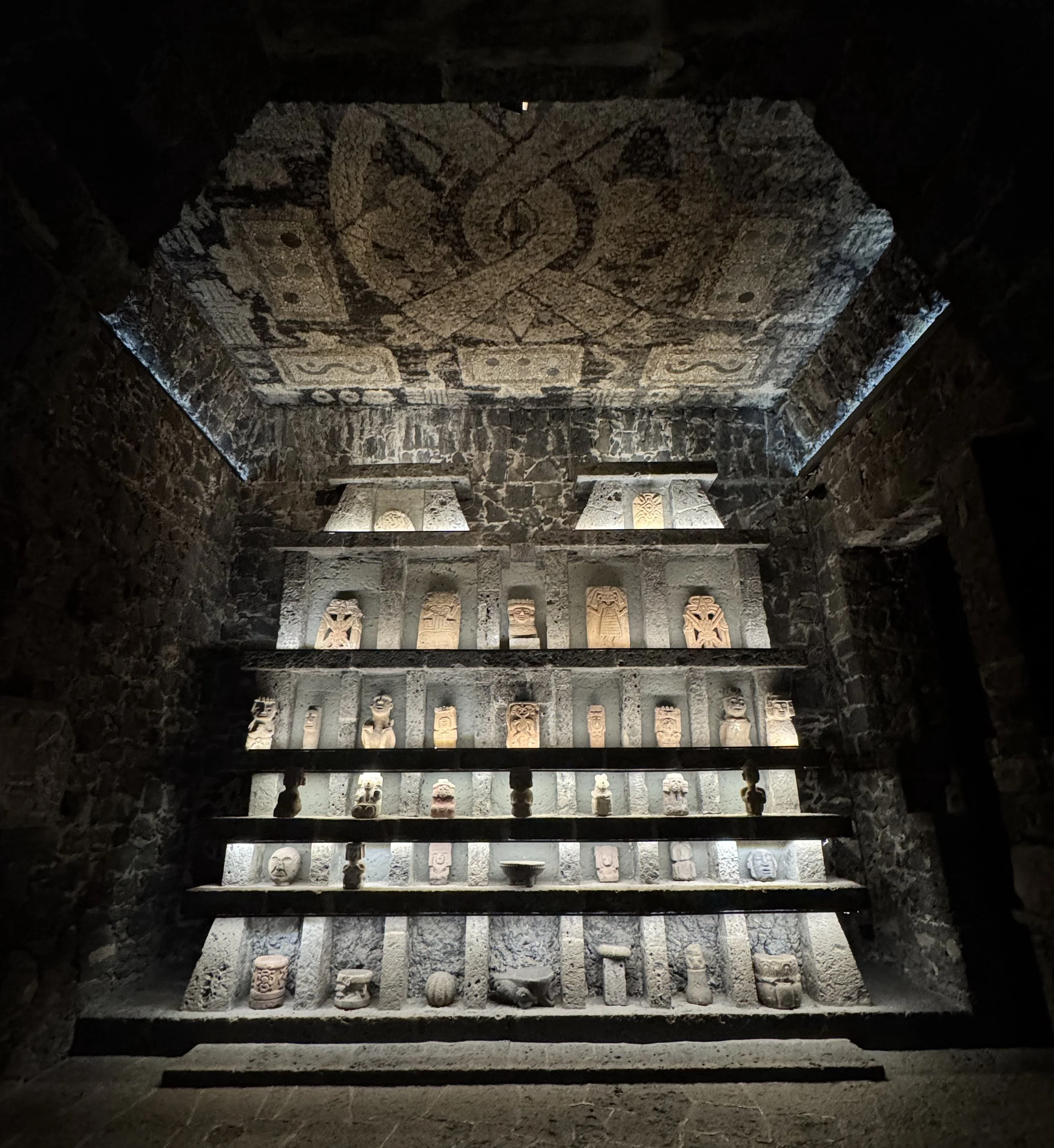
The building is an awesome, imposing structure built from local volcanic stone. Its pyramid-like form echoes an Aztec temple, and inside you certainly feel like you’re in a sacred place.
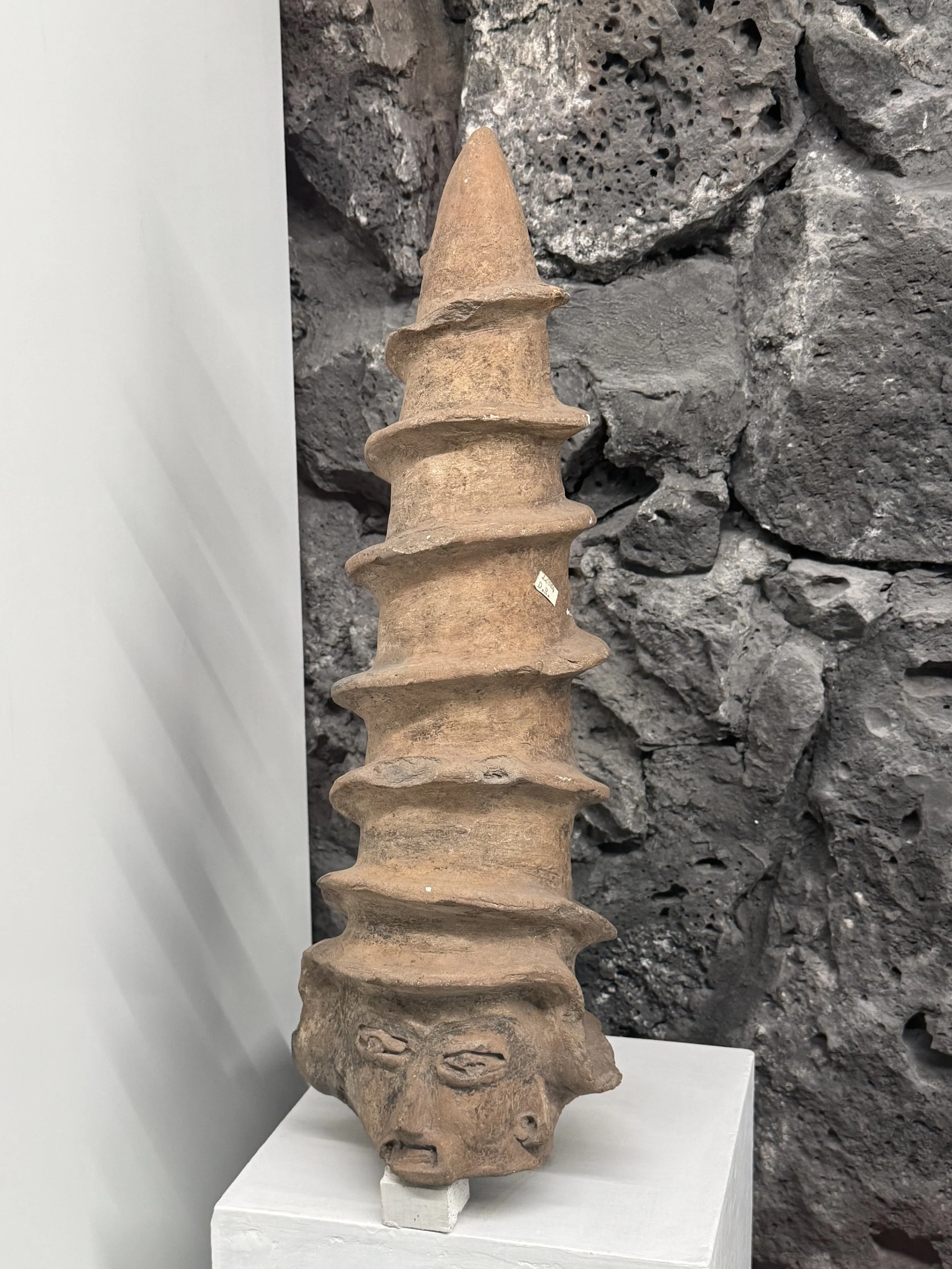
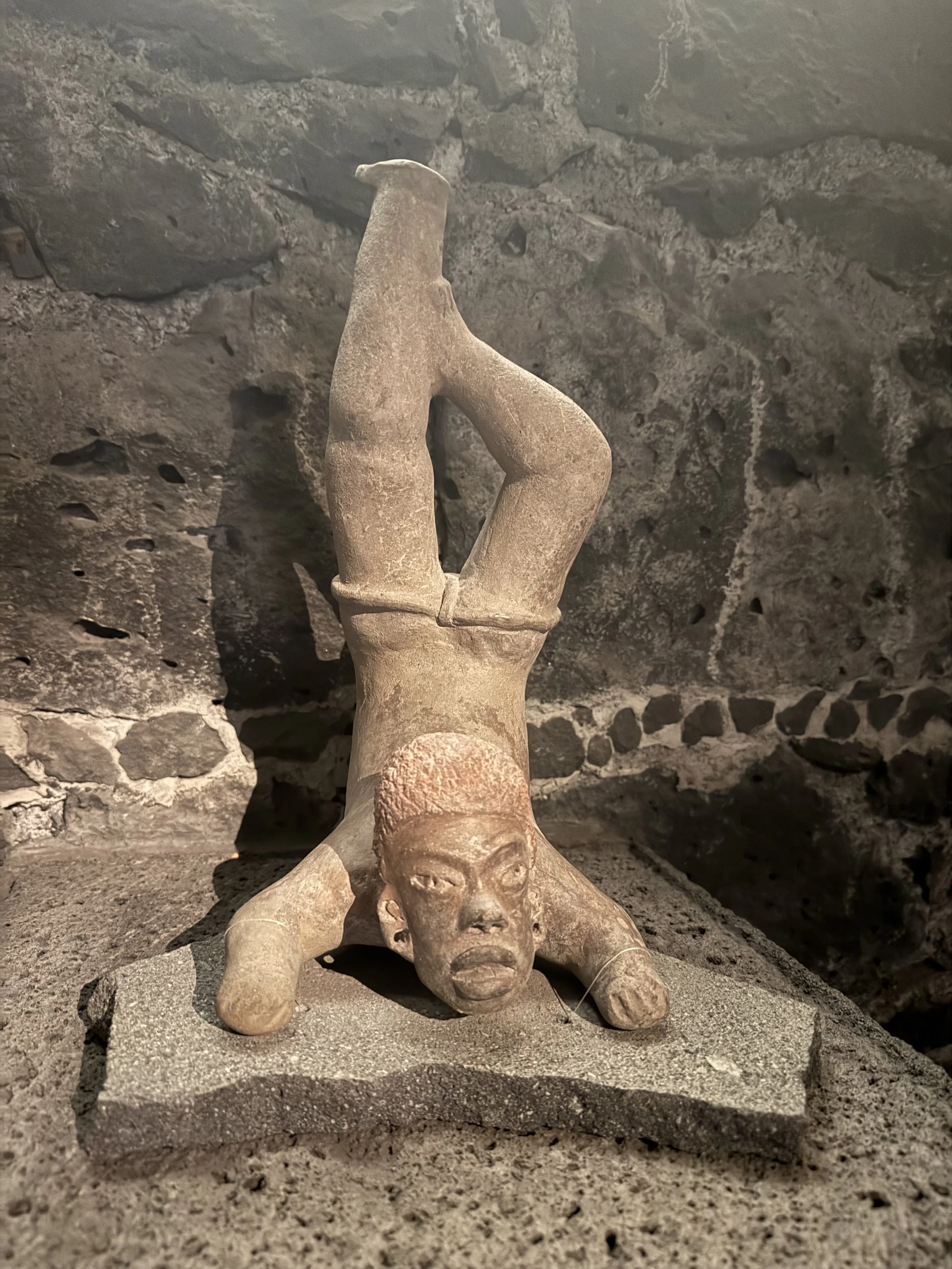
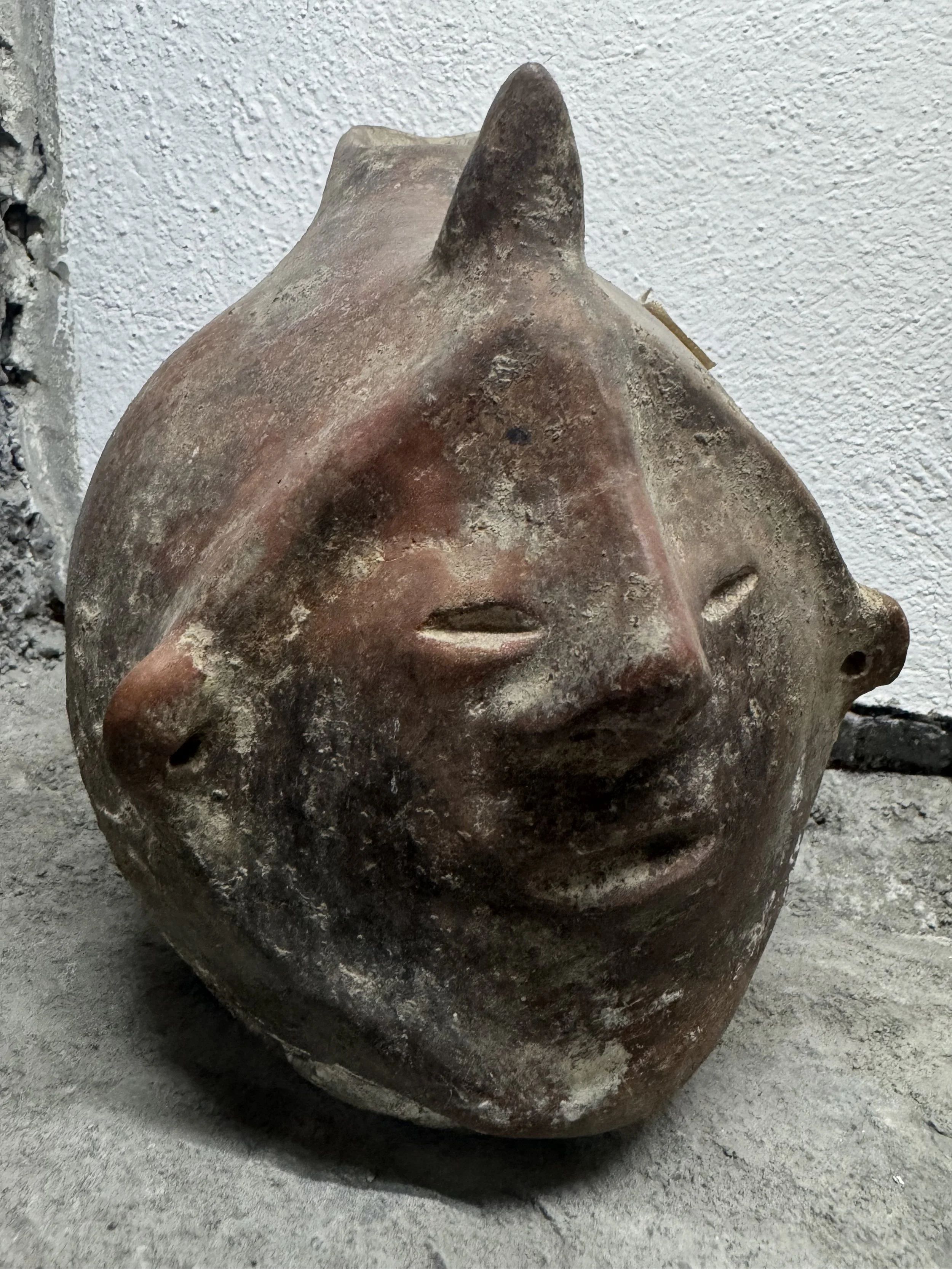
Over his lifetime, Diego Rivera collected over 60,000 stone and ceramic artifacts spanning more than three millennia. More than 12,000 are displayed here in a striking and carefully considered arrangement. I was particularly surprised by the absence of wall text and descriptive labels. I had never encountered anything like it before in a museum, and it felt incredibly liberating.
Without explanatory text competing for attention, there is a quiet purity to the museum experience. I didn’t need detailed historical context or interpretation to appreciate what I was seeing; a broad understanding of the Anahuacalli collection was enough. Instead, I simply marveled at the artistry of objects made by human hands thousands of years ago.
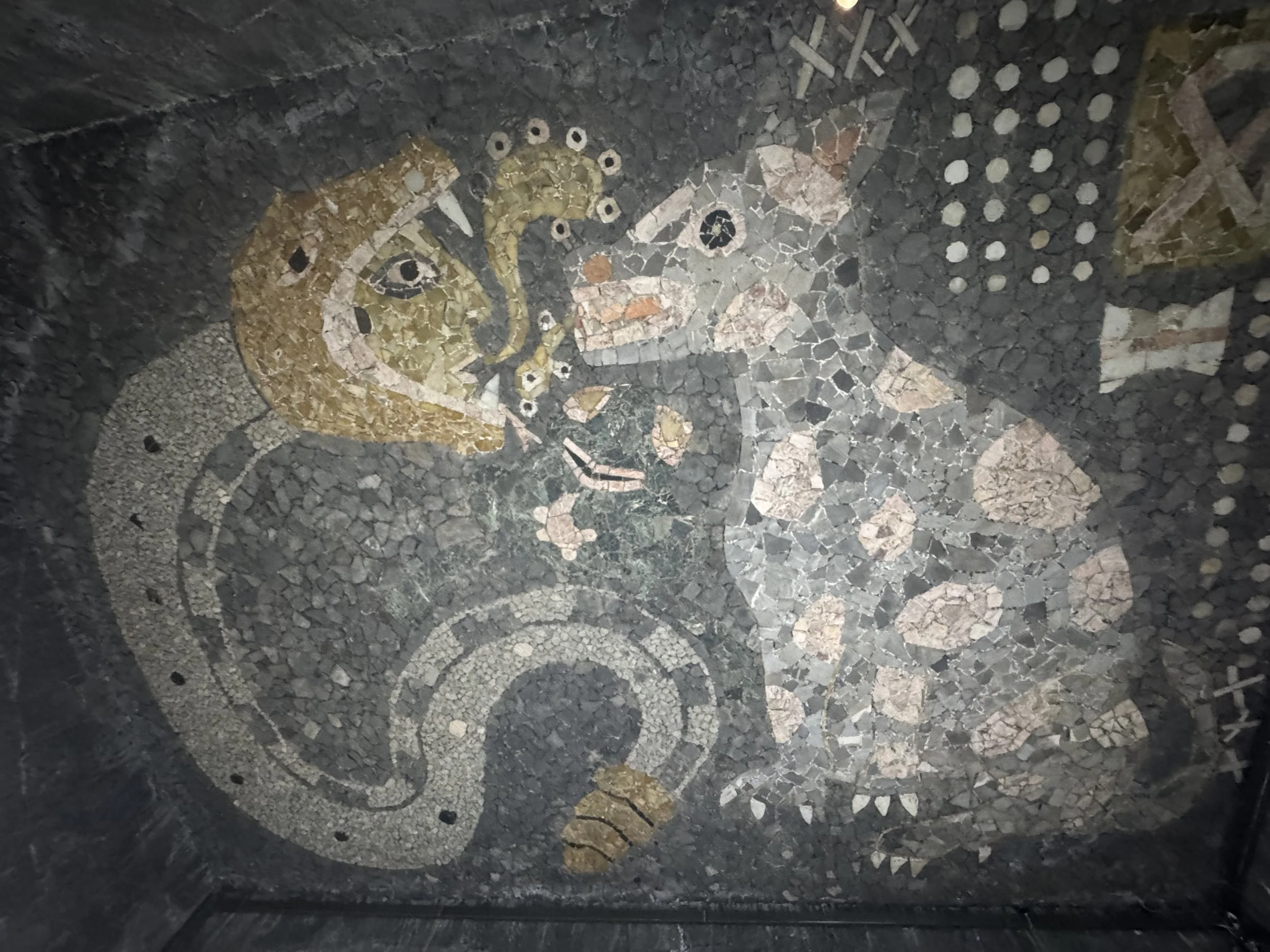
The building itself is as compelling as the artifacts it houses. It is an extraordinary work of architecture. Be sure to look up—and down—in every gallery. The mosaics are remarkable, especially the ceilings, many designed by Rivera himself.
The lower-level galleries are dark and cavernous, symbolic of the underworld and inspired by Mesoamerican cosmology. Upstairs, the museum opens into a magnificent, light-filled space where Diego Rivera's sketches for some of his most famous murals hang on the walls.
Give yourself enough time to explore not only the collection—manageable in a couple of hours—but also the surrounding complex of buildings, terraces, and walkways, all beautifully integrated into the landscape. The museum is set amid the stunning volcanic terrain of the Pedregal, where cacti and native plants emerge from ancient lava fields.
And be sure to check the calendar for the museum's rich program of workshops—ceramics, dance, nature, and more—along with live performances and special events.
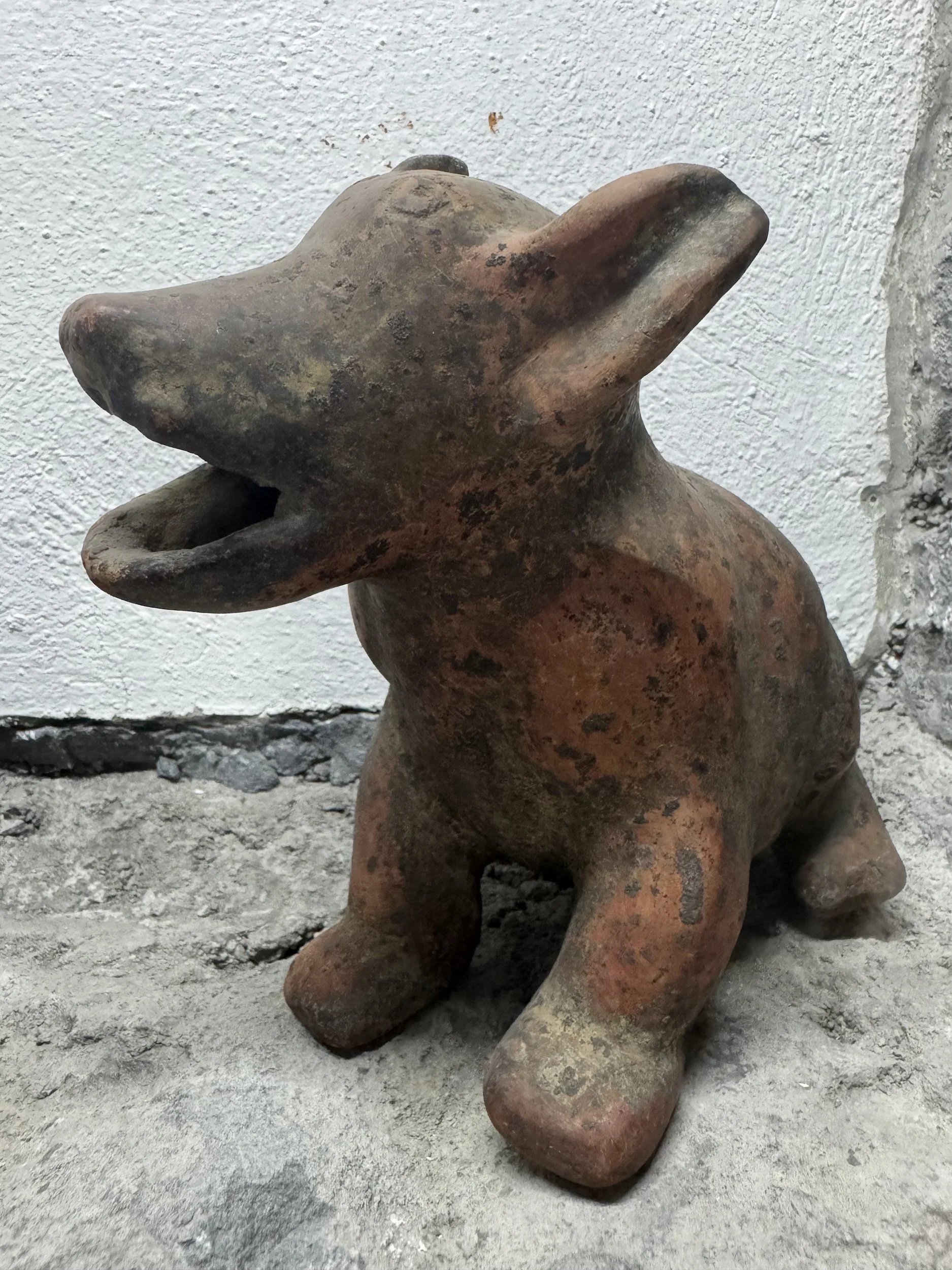
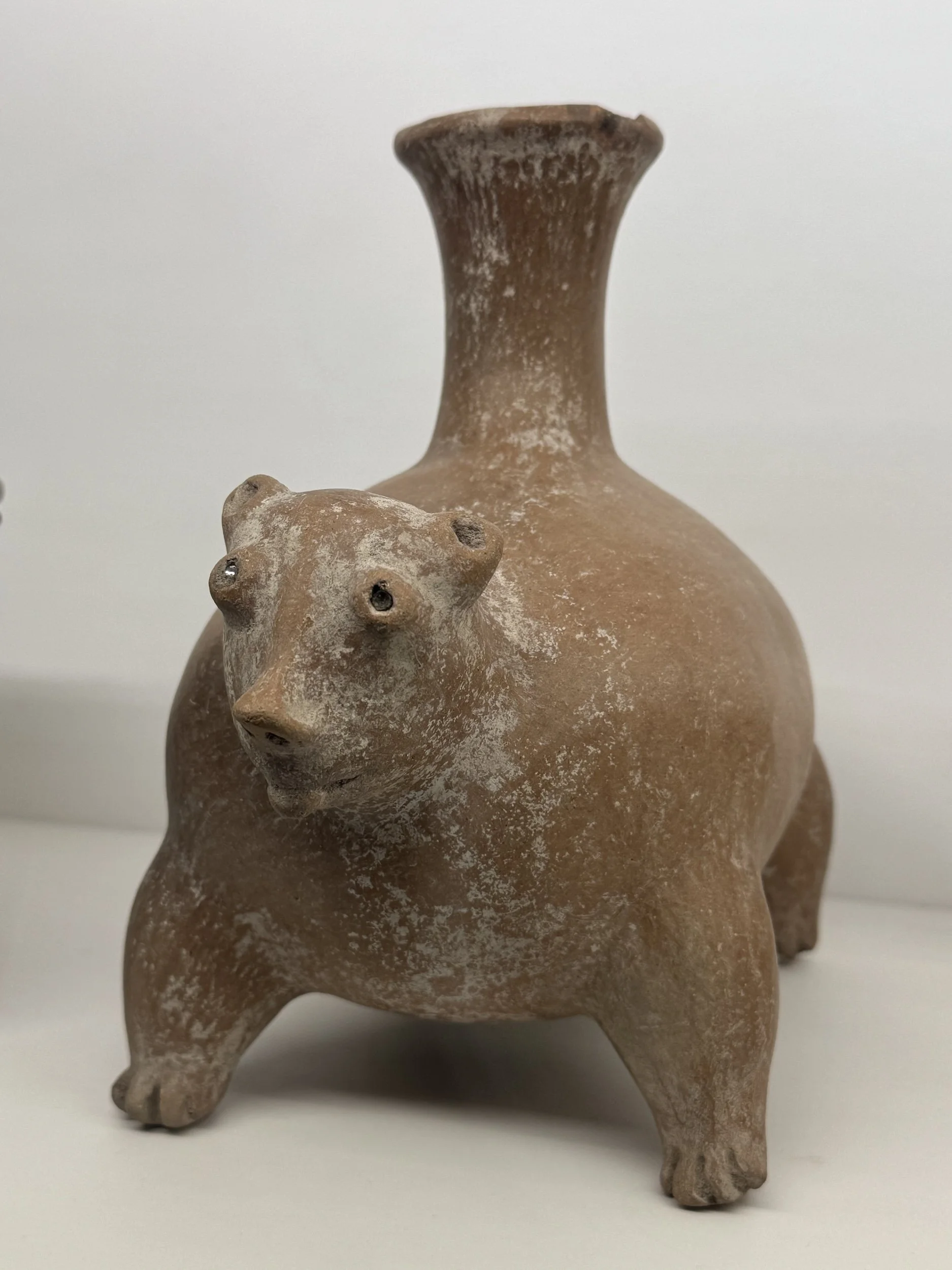
I spent my Coyoacán morning at Casa Azul—the home where Frida Kahlo was born, lived much of her life, and died—then headed to Diego Rivera's Museo Anahuacalli in the afternoon. It made for a full but deeply rewarding day. Both are exceptional museums, yet they couldn't be more different.
Casa Azul is intimate and lively—a house in the heart of town, awash in brilliant color and light, buzzing with visitors. It offers a deeply personal glimpse into the life of Frida Kahlo.
Museo Anahuacalli is a monumental stone structure set on expansive grounds, removed from the bustle of Coyoacán. It is quiet, uncrowded, and unhurried—mysterious and timeless. The artifacts are all stone and ceramic in muted earth tones. It invites contemplation.
Casa Azul was wonderful and well worth a visit. But Museo Anahuacalli is a place I will return to again and again.
Huerto Roma Verde
A sprawling, joyful community garden, art space, performance venue, marketplace, and social hub in Roma Sur, rooted in ecological awareness, sustainable living, and creative reuse. Huerto Roma Verde doesn't appear on many tourist itineraries, which makes discovering it all the more special. Authentic, local, and utterly unique, it was easily one of my favorite finds in CDMX.
The complex occupies land where buildings once stood before being destroyed in the devastating 1985 earthquake. Years later, community members cleared and reclaimed the site, transforming it into this remarkable eco-cultural center and urban green space.
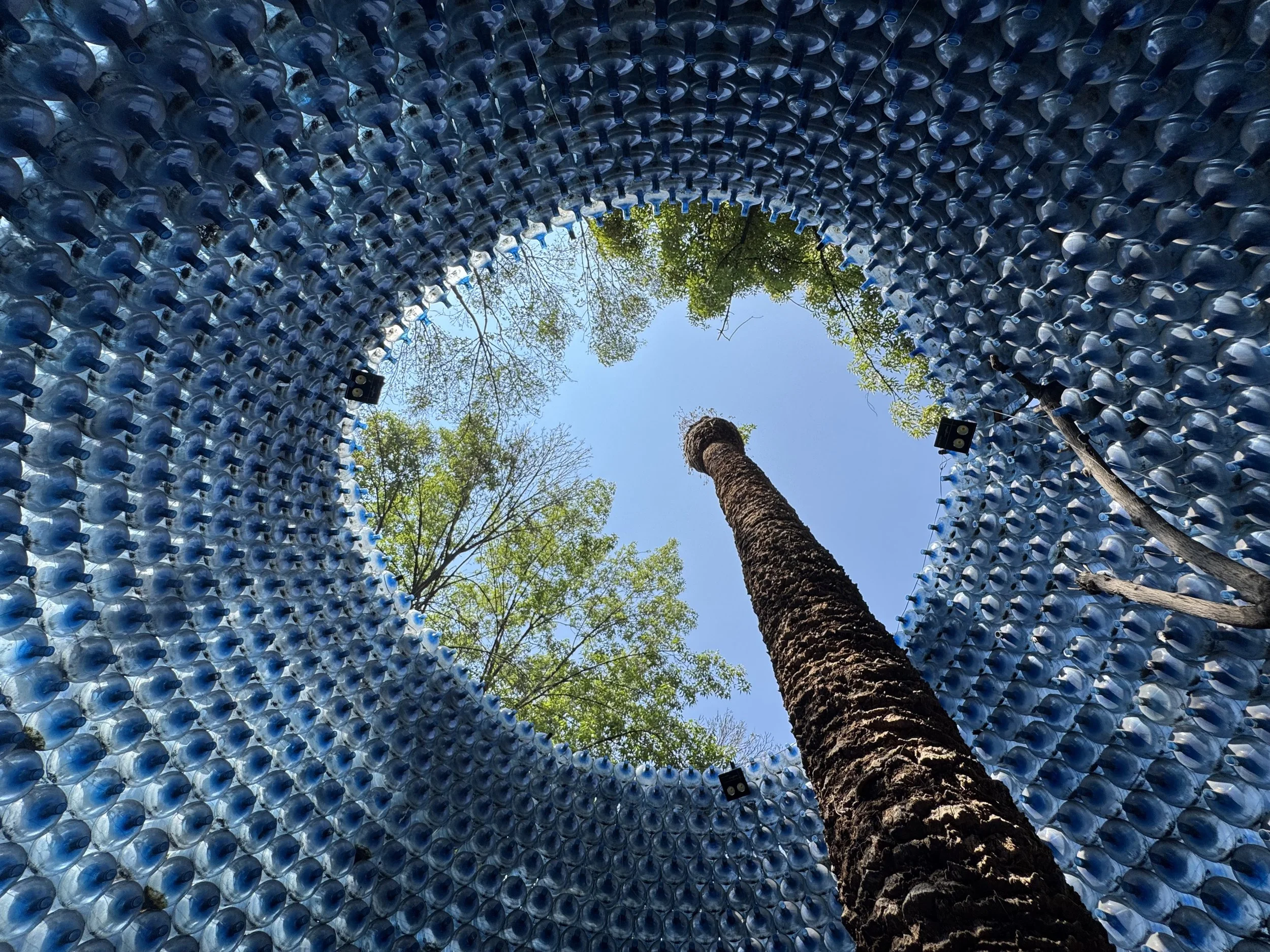
The main entrance is marked by a fabulous tower constructed from empty plastic water-cooler jugs. Whimsical and inventive, it serves as a fitting introduction to what lies within: a place where nearly everything reflects the principles of reuse, reinvention, and imagination.
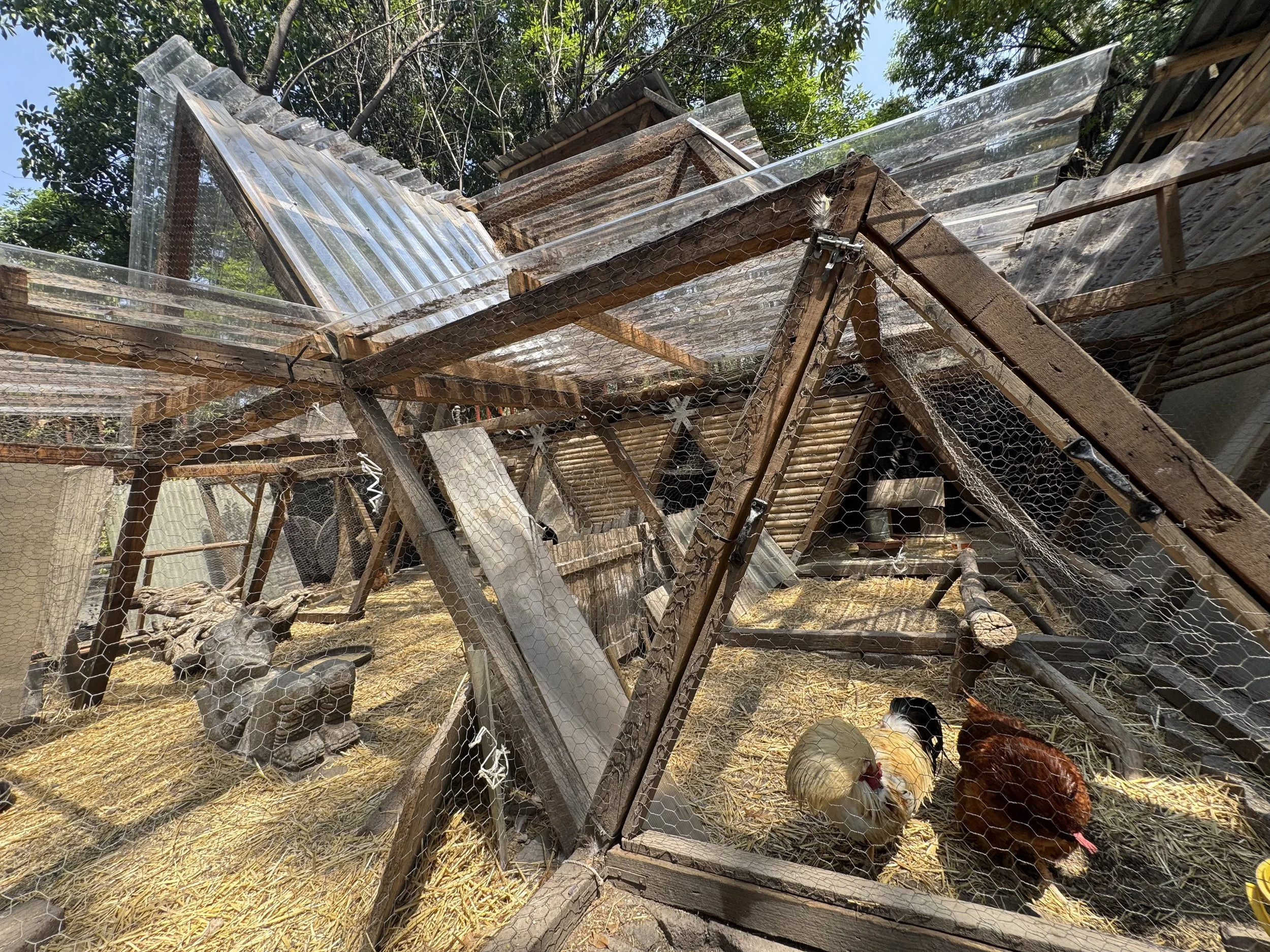
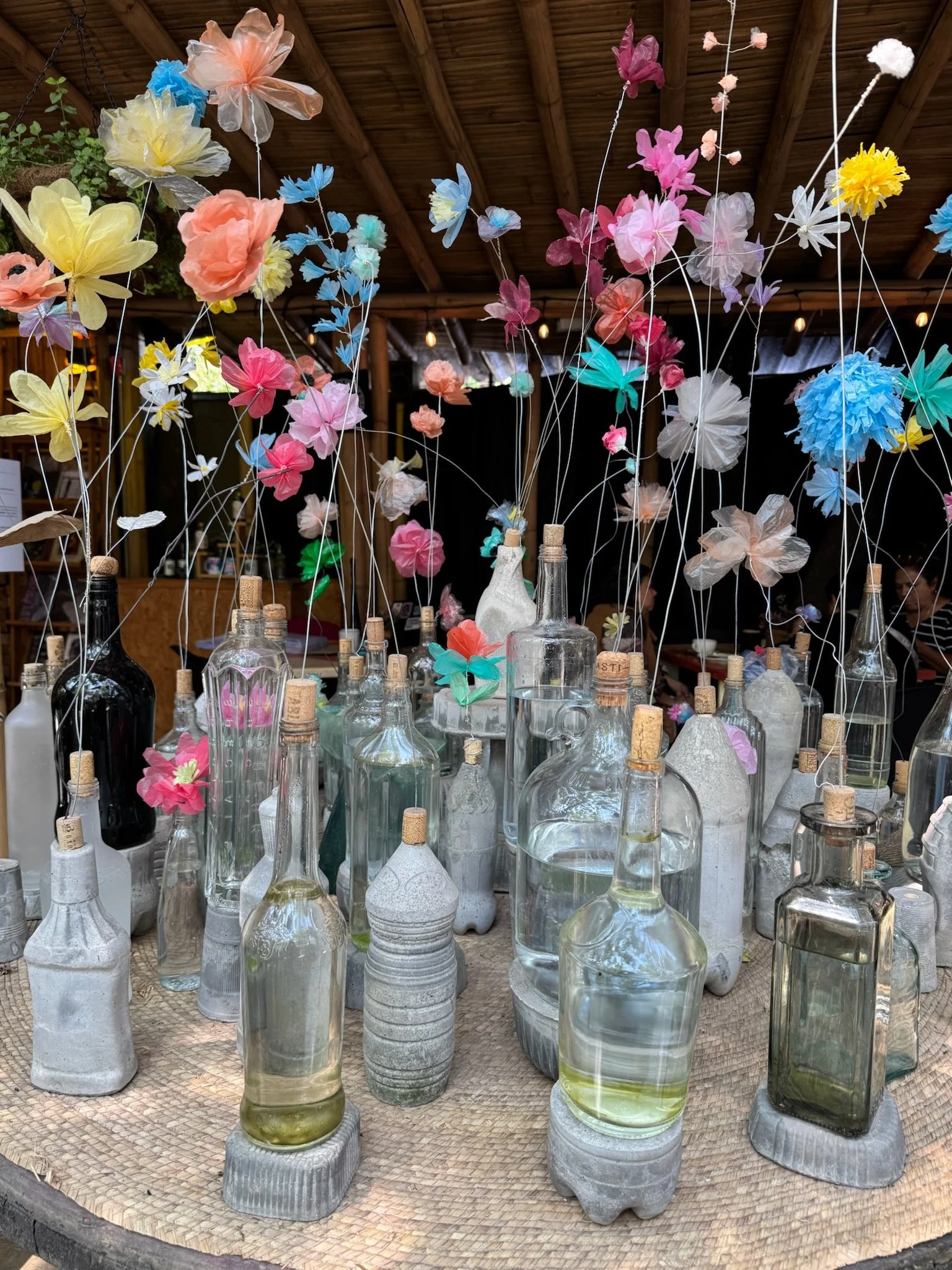
I spent over two hours exploring on a Saturday morning. I made flowers from discarded plastic bags at the café as part of an art project. I browsed the market in the central plaza—lively with music, food, and local crafts. I came upon “Chickenitza,” the most deluxe chicken coop I’ve ever seen, then popped into a ceramics studio, a furniture workshop, and a toymaker’s space. I wandered and kept finding surprises. Among them: the ecological sanitation system that turns human waste into compost. Nothing is wasted here.
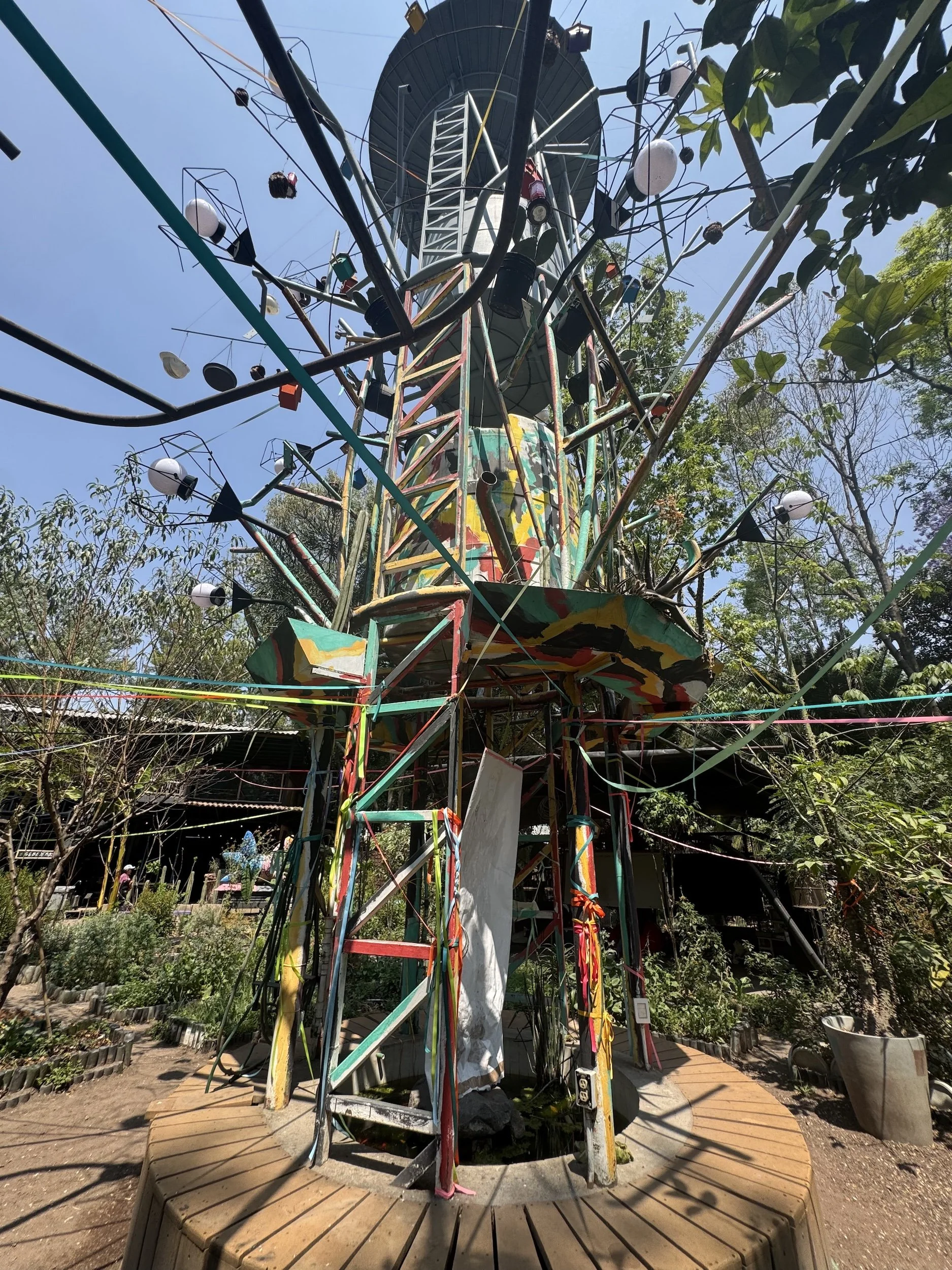
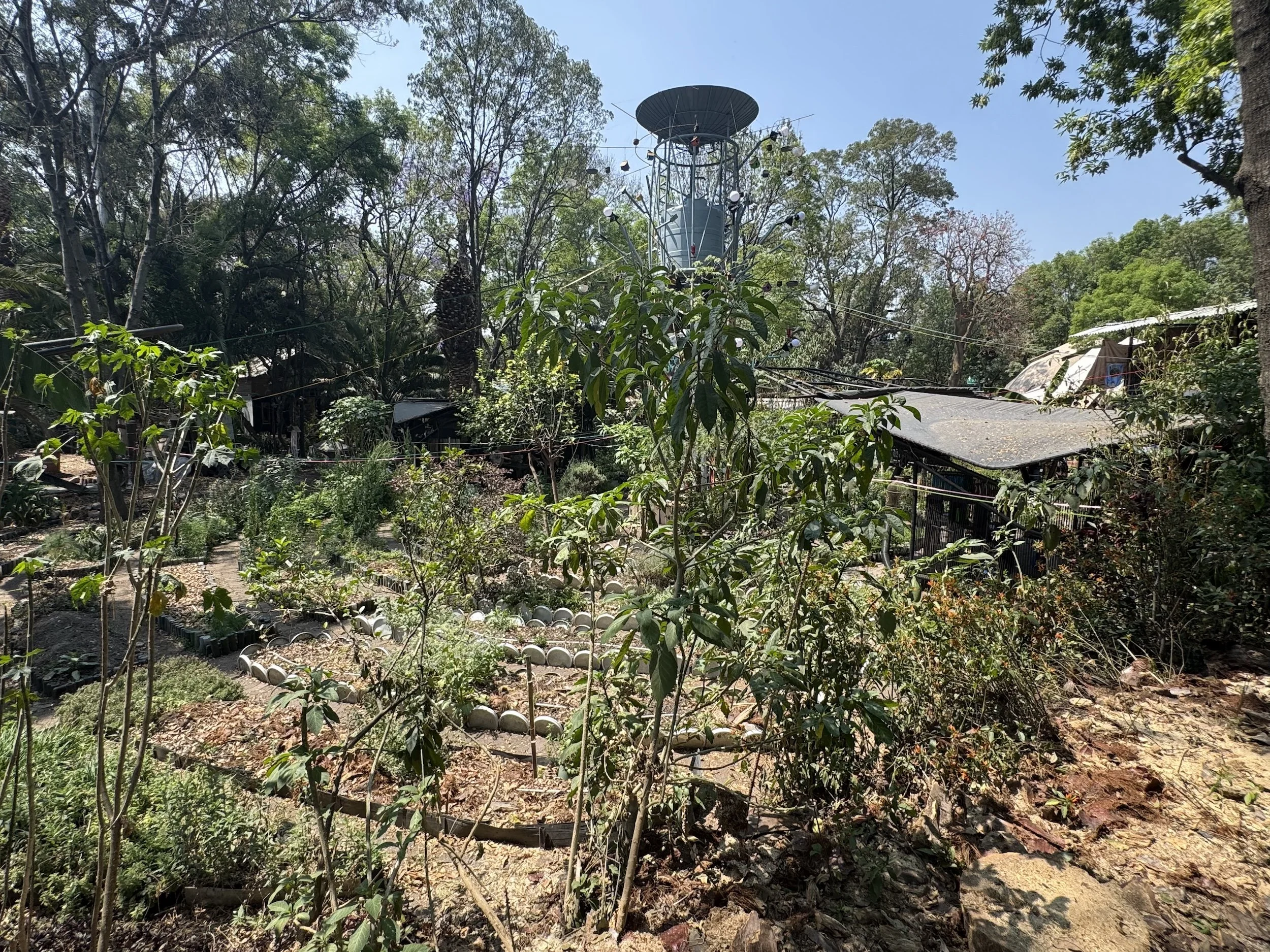
The centerpiece of Huerto Roma Verde is a mandala-like community garden with concentric planting beds surrounding a sculptural rainwater-harvesting tower. Garden paths and beds are edged with empty bottles and plastic lids. The property also features a bamboo geodesic dome, meditation and yoga huts, and other ingenious structures, most built from salvaged materials.
Huerto Roma Verde offers a vision of a more sustainable, resourceful, community-oriented way of life. It is a profoundly inspiring and life-affirming place. I absolutely loved it.
Be sure to check the calendar for workshops, concerts, screenings, forums, and special events.
Mercado Jamaica
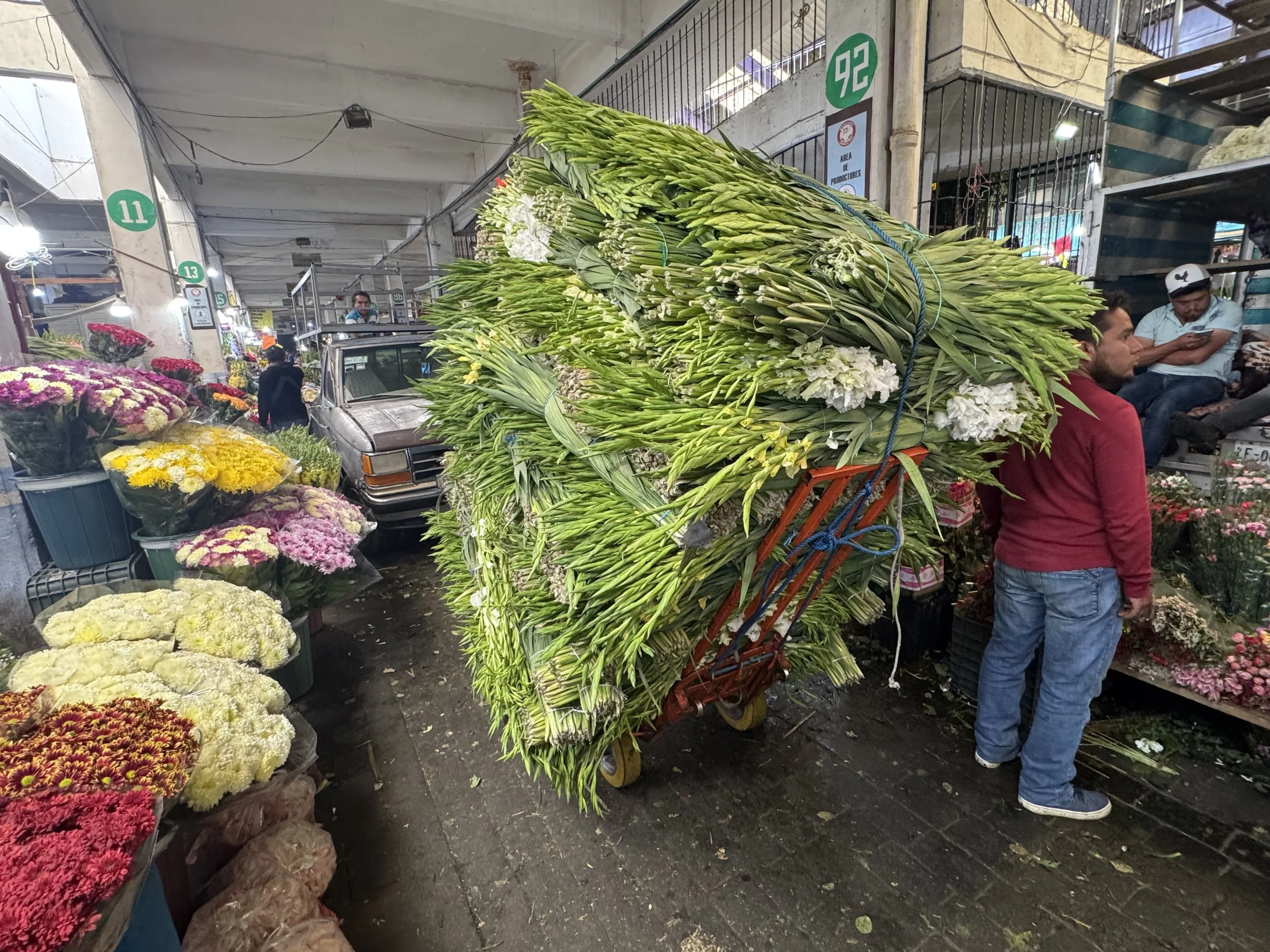
So many flowers under one roof is a sight to behold. At Mercado Jamaica, Mexico City’s main flower market, hundreds of vendors sell an astonishing range of blooms—stall after stall bursting with fresh-cut flowers, elaborate arrangements, and ornamental plants.
One of the world’s largest flower markets, Mercado Jamaica lies just southeast of the city’s historic center—a bit off the beaten path, largely overlooked by tourists, and absolutely worth your time.
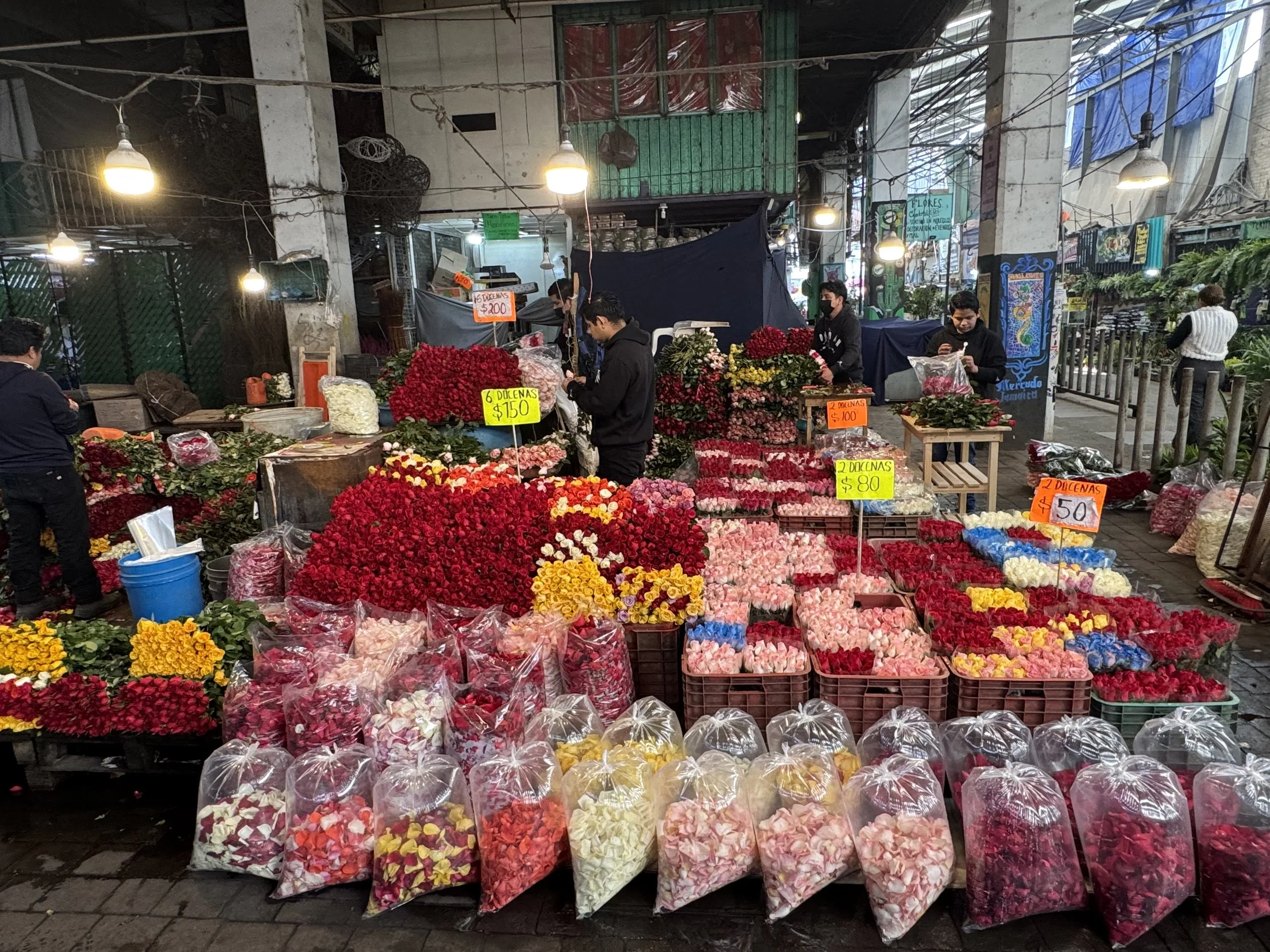
My favorite part is the central aisle where distributors display massive stacks, bundles, and buckets of cut flowers. I was amazed by the number of roses in just a single stall, and the large plastic bags of loose petals for sale. This part of the market is a hive of activity—where workers unload truckloads of flowers and drive carts piled high with blooms.
Florists occupy the next aisle over—displaying fabulous arrangements for weddings, funerals, communions, Day of the Dead … you name it. Giant floral hearts, crosses, and wreaths, as far as the eye can see.
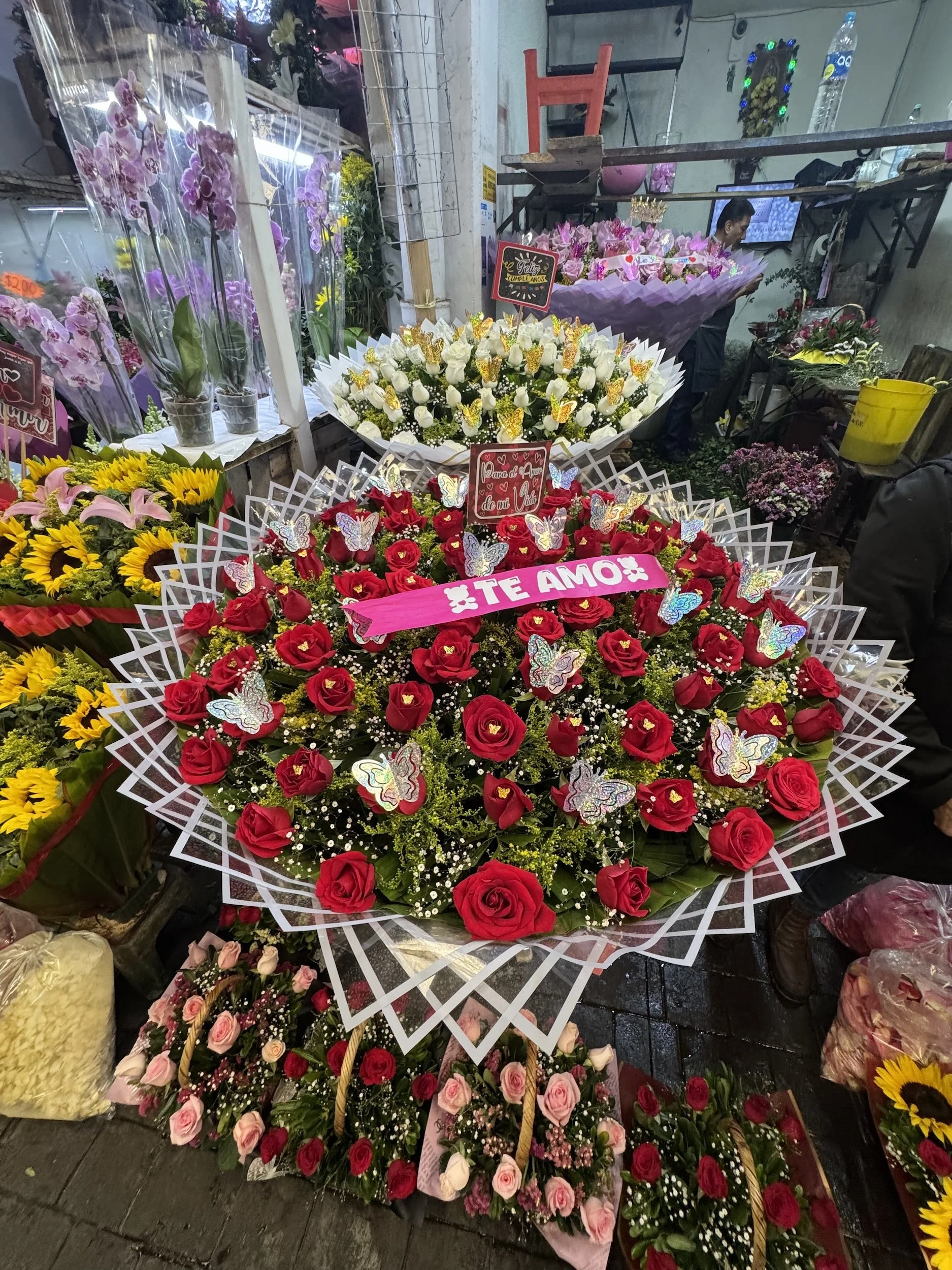
As with so many things in CDMX, the flower market is delightfully over the top. While much of the business is wholesale, you can easily purchase a bouquet to take with you.
Next trip, I'm heading here at the very start of my stay to buy flowers for my room. A dozen long-stem roses can cost as little as $6 USD, while sunflowers and other blooms are equally cheap.
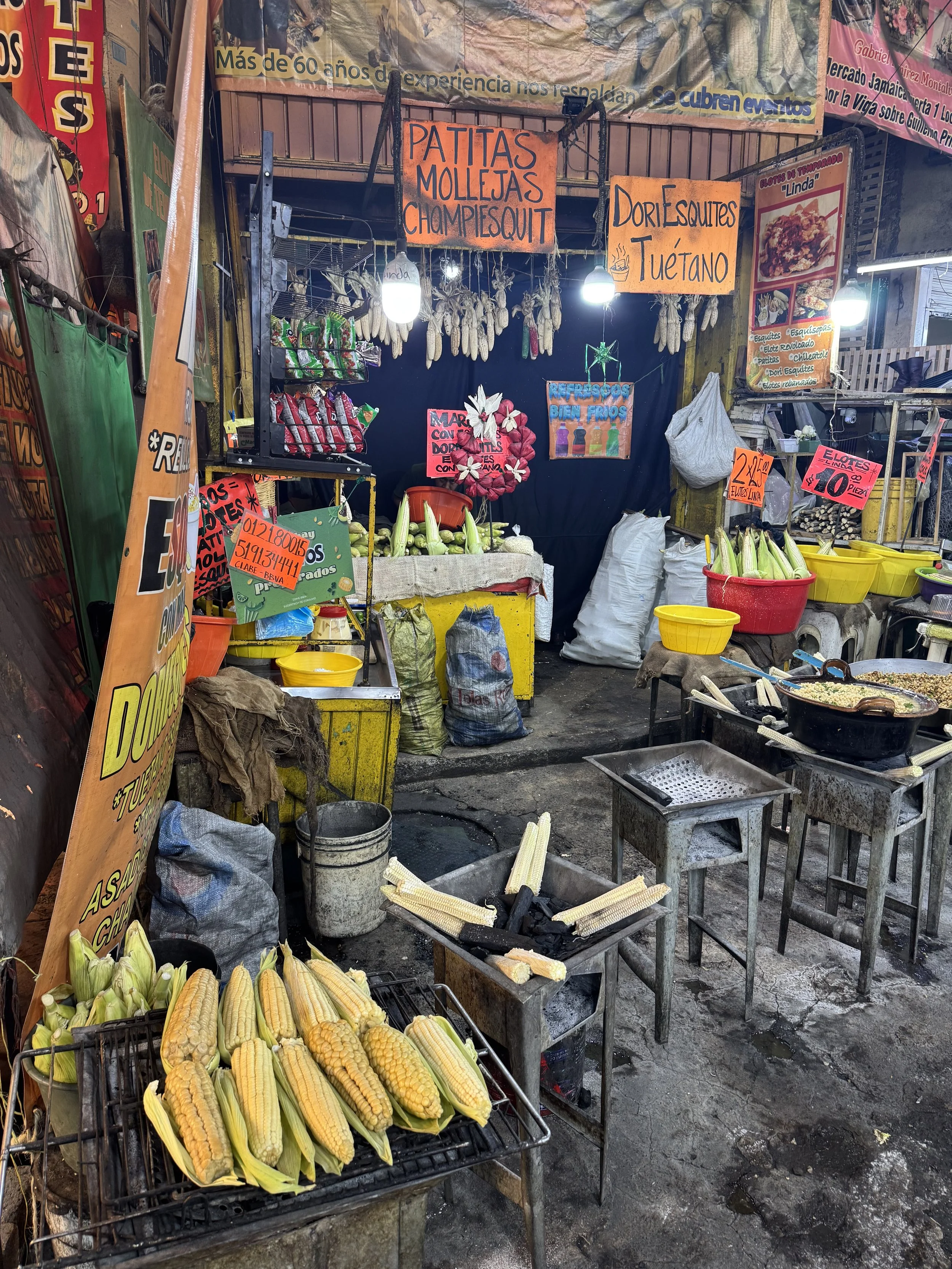
Beyond flowers, Mercado Jamaica is great for spices, produce, and street food. In particular, many vendors sell elotes and esquites—there’s corn grilling and simmering all over the place. A shout out to La Güera Elotes, located near the Guillermo Prieto Street entrance. Try their blue cornbread, too.
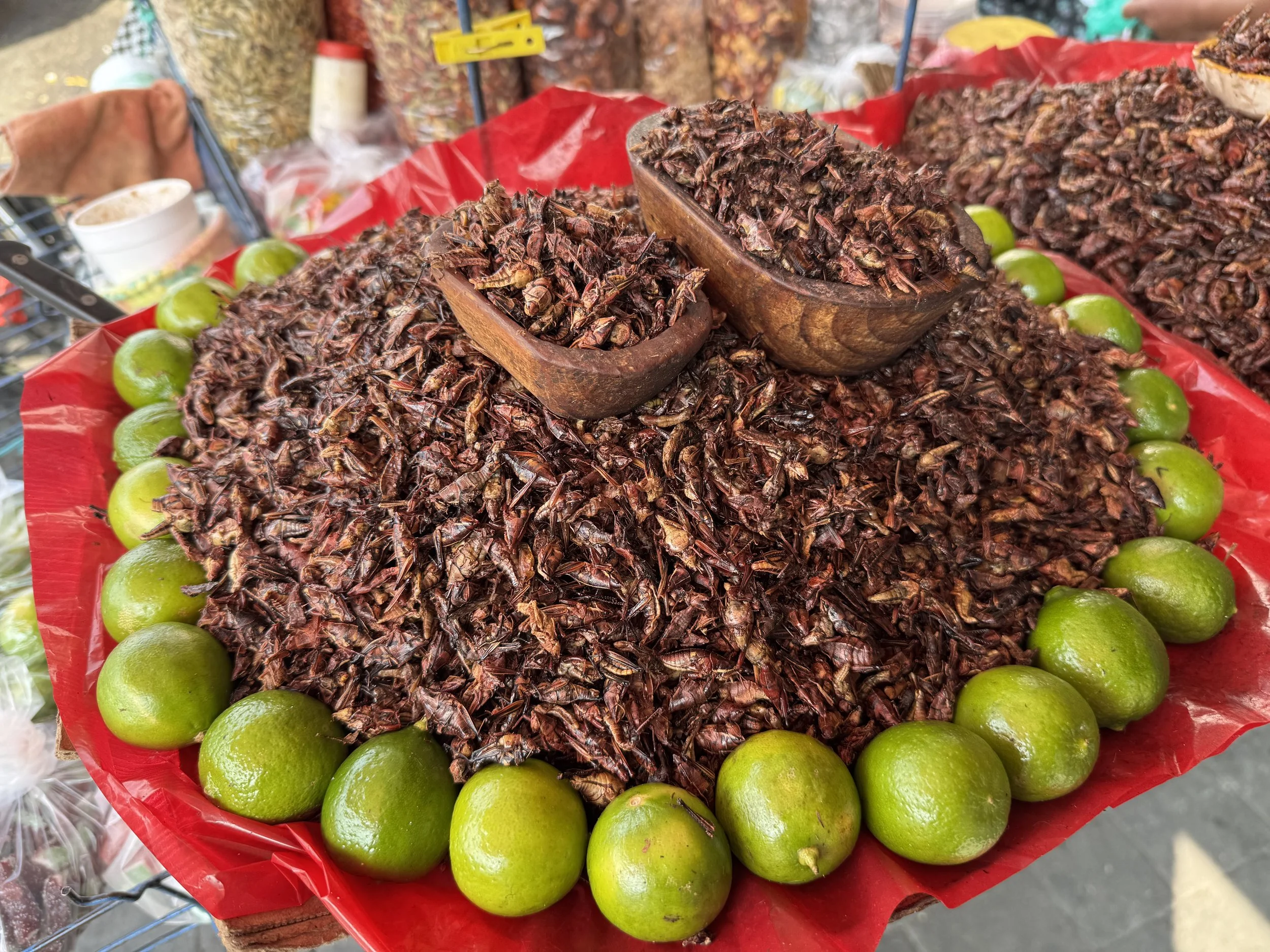
Just outside the market, I tried fried grasshoppers for the first time. Crunchy and seasoned with lime and hot sauce. Delicious!
Keep in mind:
Unlike many Mexico City markets, Mercado Jamaica operates around the clock—but mornings are when the market is at its most vibrant, with flowers arriving and vendors at their busiest.
Plan to arrive in the morning, enjoy lunch there, and leave the afternoon free for another adventure.
Santa Maria la Ribera
A wonderful, unpretentious, lesser-known neighborhood—perfect for a Saturday afternoon. La Condesa and Roma Norte are great, but Santa María la Ribera still has a lived-in, distinctly local feel.
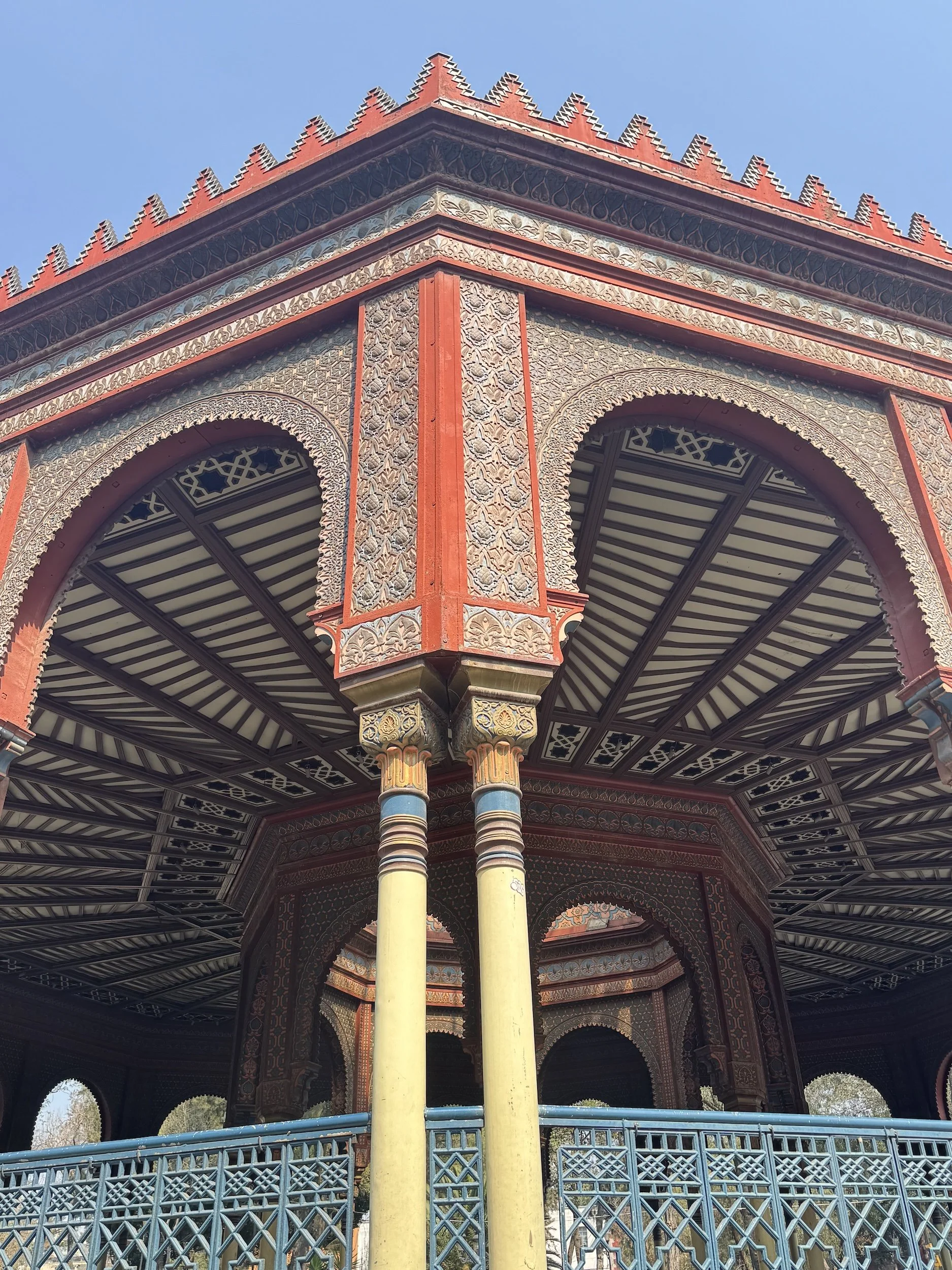
The centerpiece is the ornate Kiosco Morisco in Alameda de Santa María la Ribera, the neighborhood’s central park. The colorful Moorish kiosk was built as Mexico's pavilion at the 1884 World's Fair in New Orleans before being relocated to Mexico City in 1902. I don't know why Mexico was represented by a Mudéjar-style structure that looks like it belongs alongside the Alhambra, but it's an impressive and joyful sight.
The park is spacious, leafy, and perfect for a leisurely afternoon. On Saturdays, it's lined with craft and food vendors—don't miss the ice cream stand at the park's northwest corner. You'll find families spending time together, people walking their dogs, and couples dancing near the kiosk. (Sunday is also a big day for dancing.)
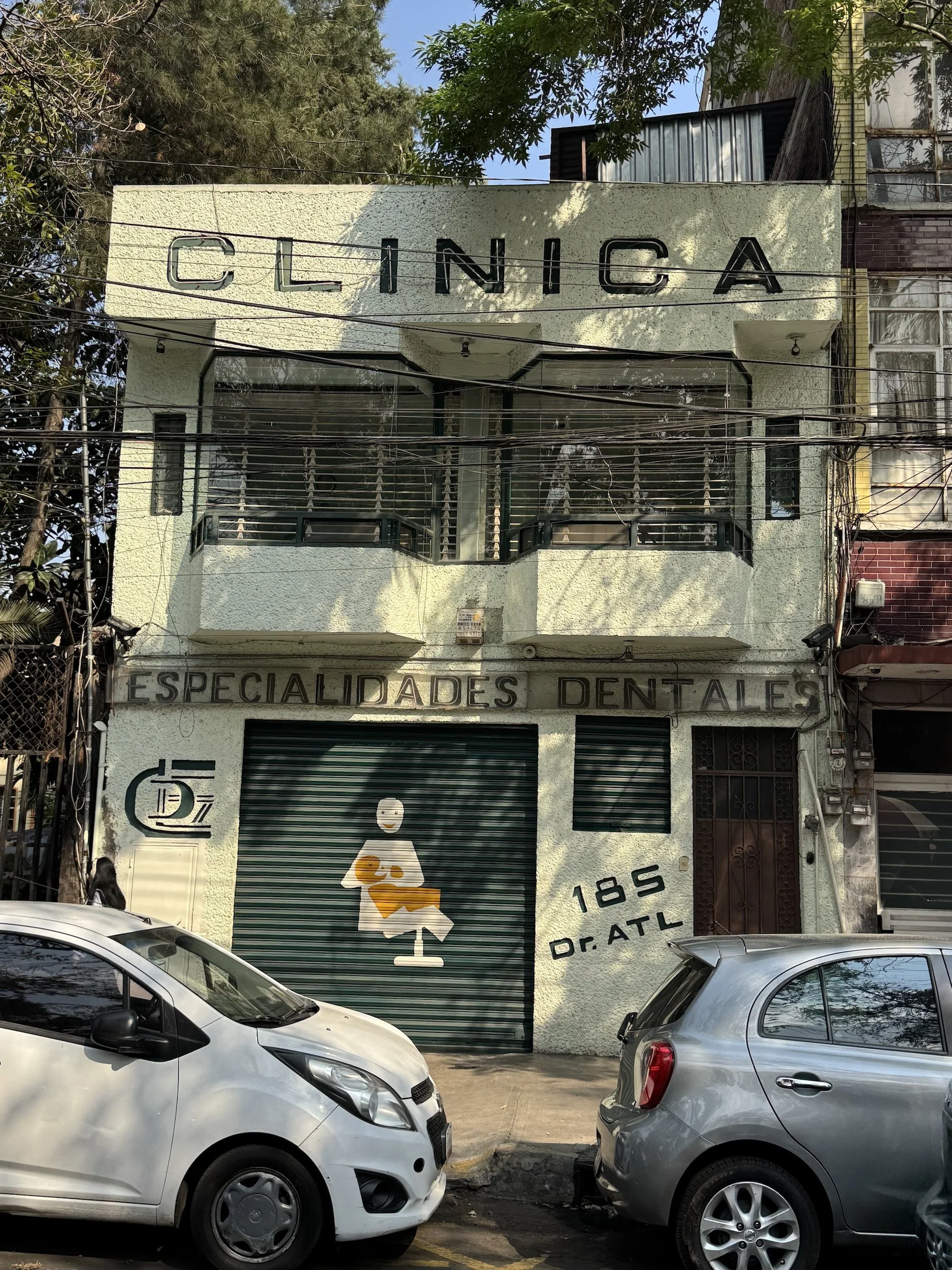
The neighborhood is full of inexpensive places to eat, charming storefronts and façades, and overlooked architectural gems, including the Museo del Instituto de Geología, the Neo-Byzantine Parroquia Josefina Sagrada Familia, and the Art Nouveau Museo Universitario del Chopo.
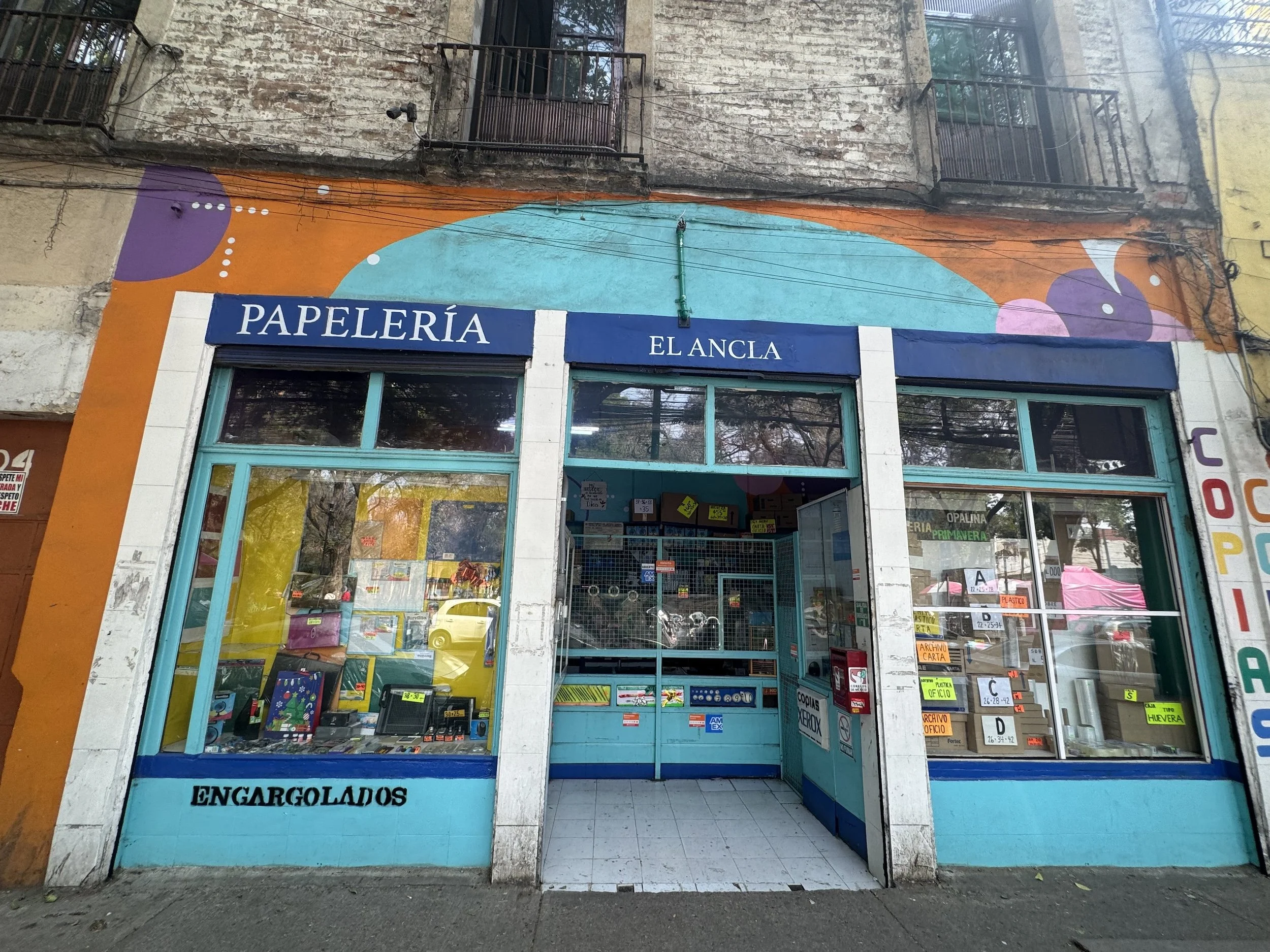
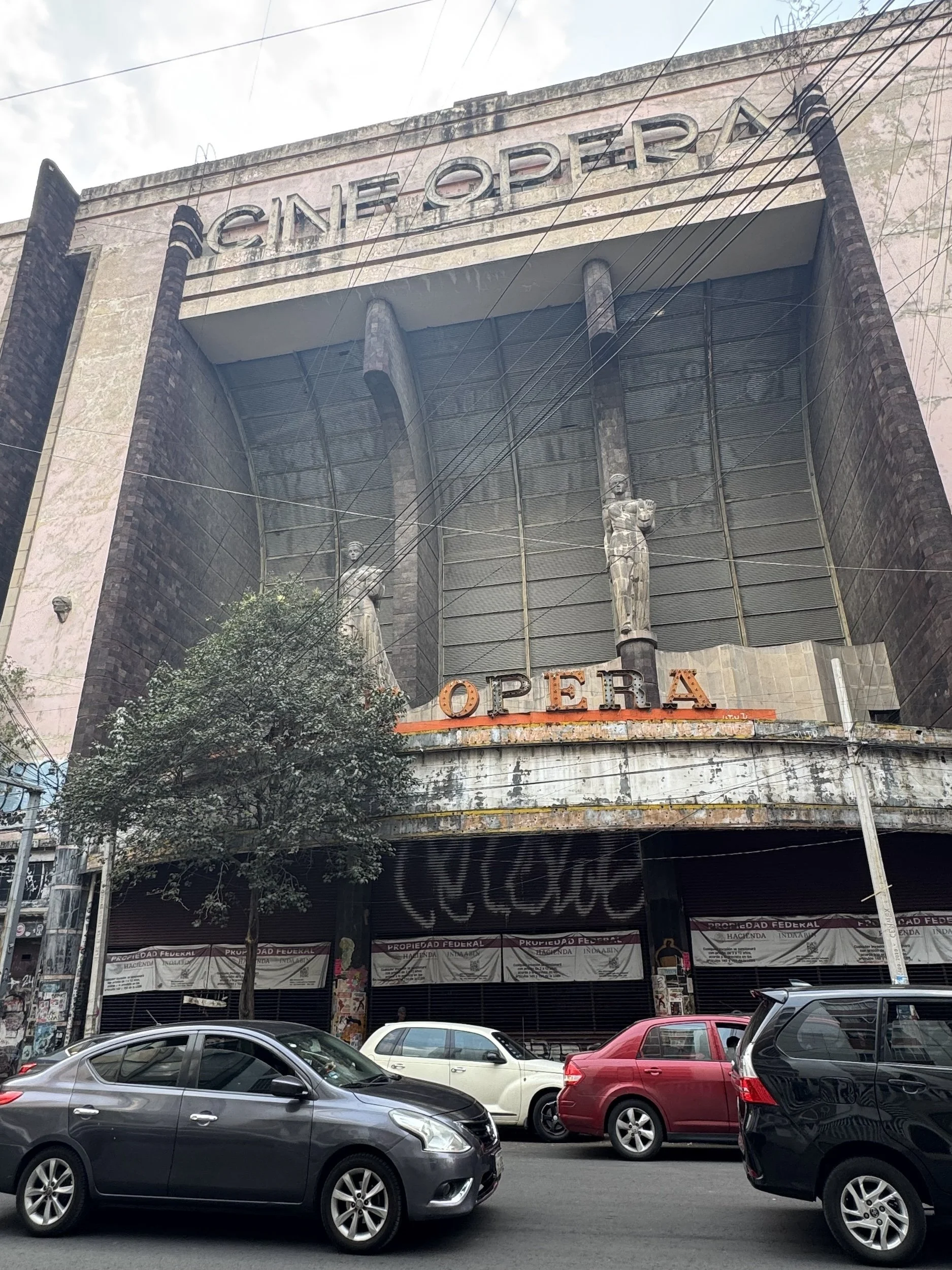
After spending time in the park and exploring the neighborhood, one of the highlights of my day was walking from Santa María la Ribera across San Rafael to trendy Juárez, following Calle Doctor Atl and then Calle Serapio Rendón. The walk passes through an utterly local stretch of Mexico City. Be sure to notice the hulking, crumbling Cine Ópera on Calle Serapio Rendón—once one of the city's grandest movie palaces, still magnificent in its graffiti-covered decay.
To make a full day of it, begin at the extraordinary Biblioteca Vasconcelos, just a ten-minute walk from Alameda de Santa María la Ribera. Conceived as an ark of human knowledge, this mammoth library resembles a monumental ship from the outside. Inside, towering steel bookshelves appear to float within the cavernous, airy, light-filled space.
An intricately decorated whale skeleton hovers above the main hall. Spend time wandering the glass-floored walkways and floating staircases of this surreal work of modern architecture.
Lost in La Lagunilla
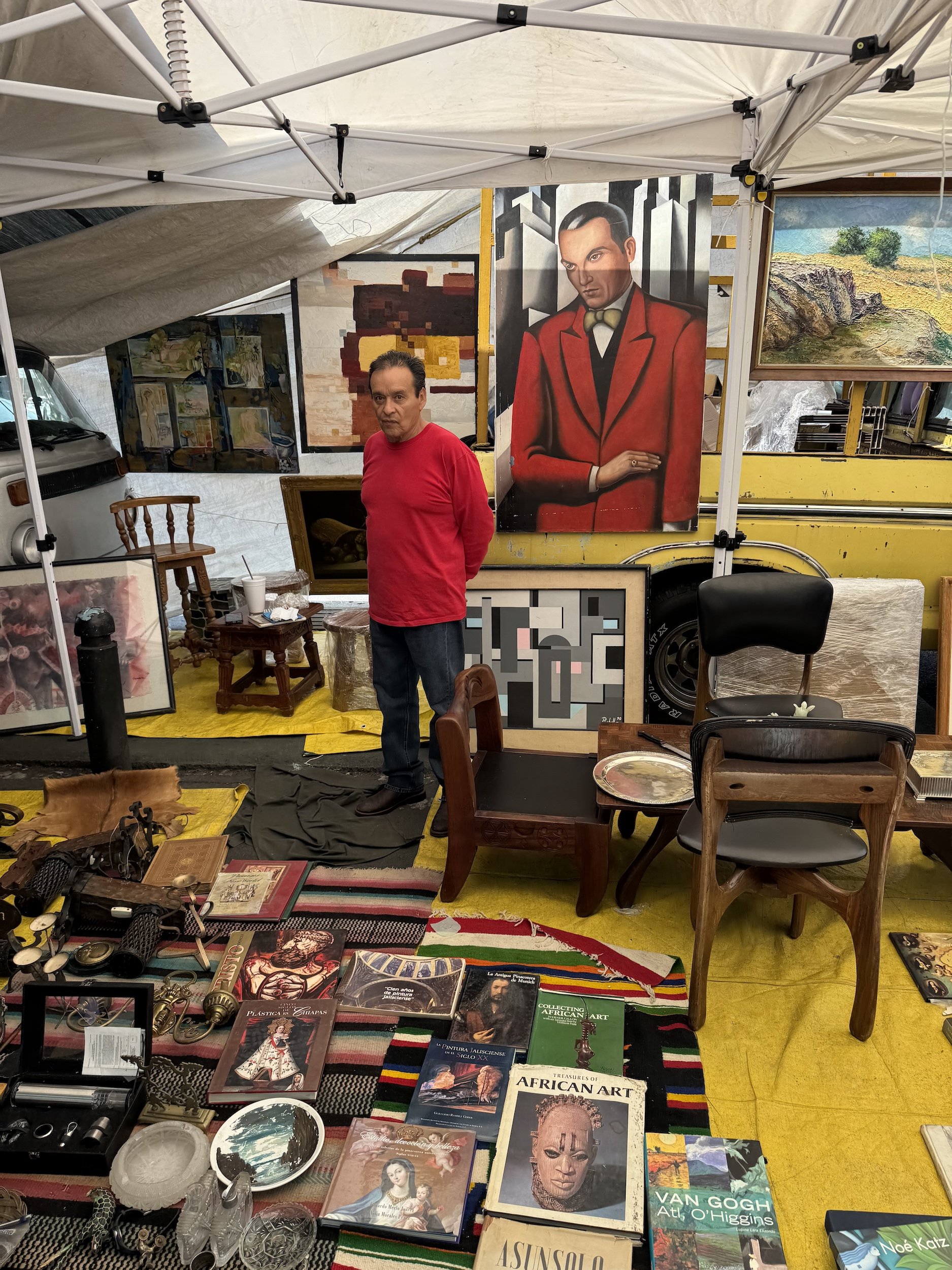
Lost in La Lagunilla, I was overjoyed. The Sunday antiques market is legendary, but it's only one part of a much larger mercado. My Uber dropped me at the wrong entrance, and before I knew it, I was deep inside seemingly endless aisles of vintage clothing stalls—hundreds of them. I happily wandered as music blasted from vendors all around me. I had no idea where I was going, but that’s half the fun.
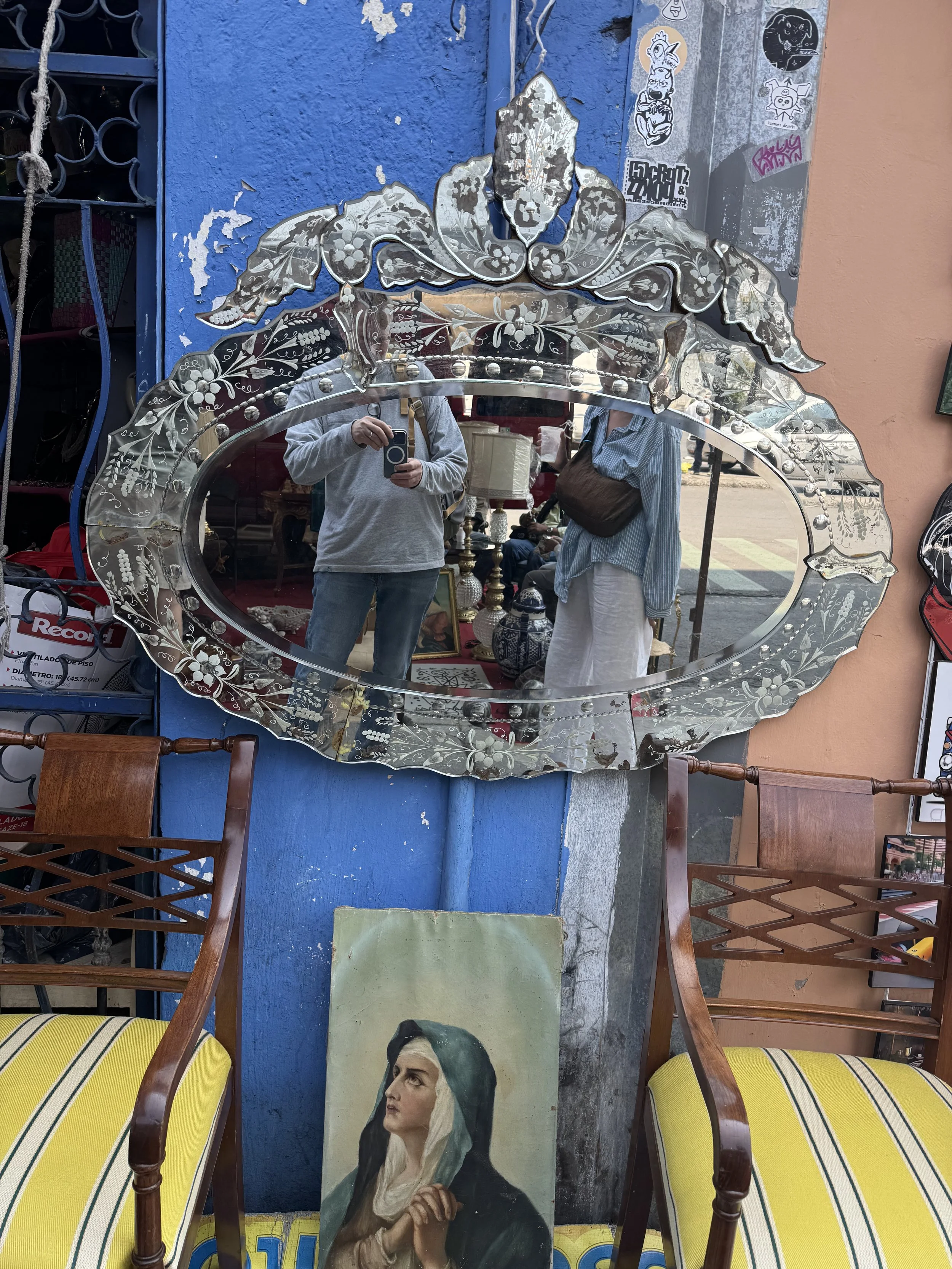
Eventually, I found myself surrounded by antiques. If only I’d had room to bring home a few vintage cameras, an old typewriter, a transistor radio, several rotary telephones, glass lamp globes, a mid-century modern chair, a framed portrait of David Bowie, a cow skull (naturally)—and perhaps a few reptile-leather change purses, as gifts.
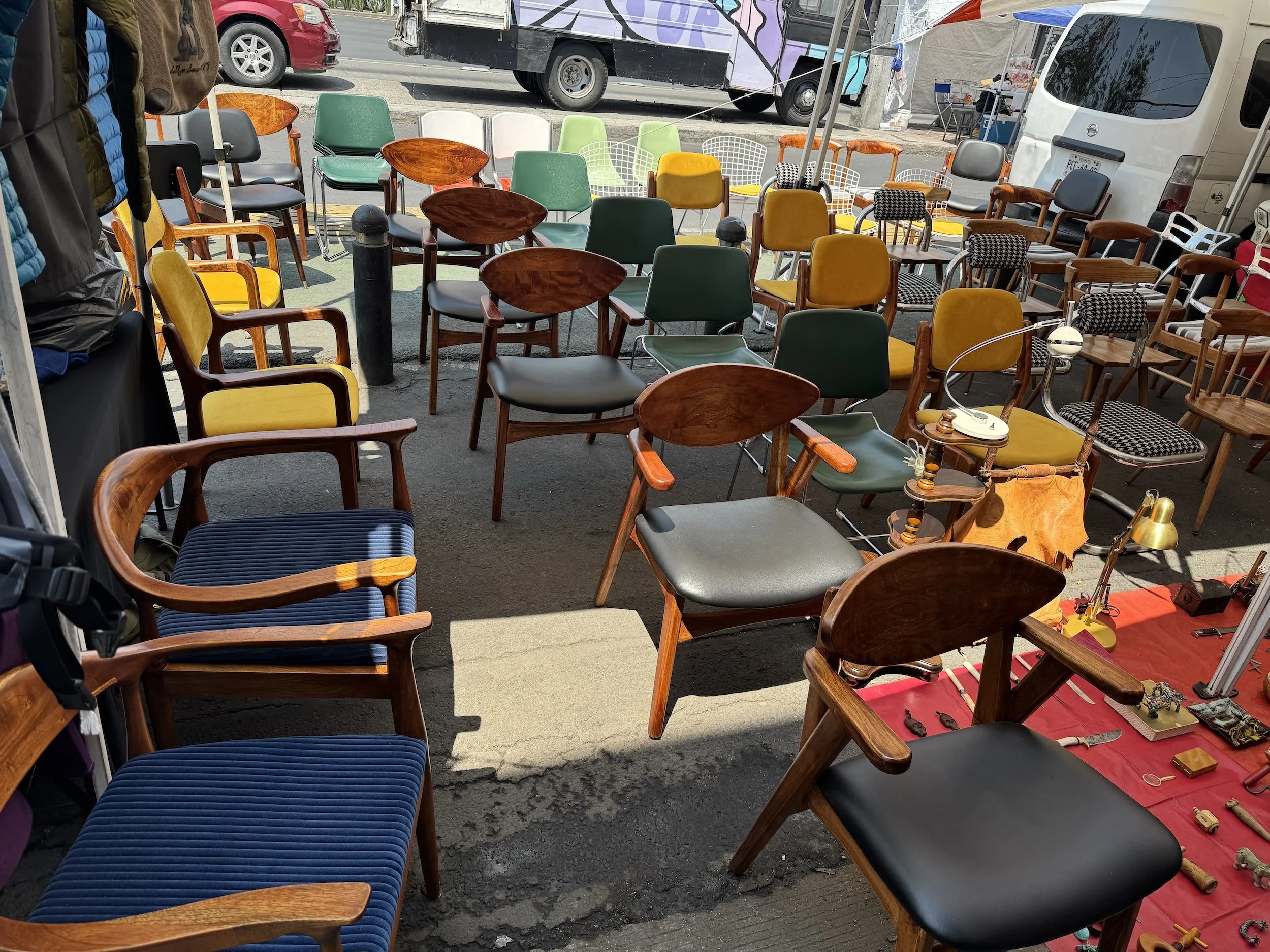
The main La Lagunilla market operates daily and draws shoppers from across Mexico City for clothing, fabrics, furniture, and household goods. But on Sundays, the market expands into the surrounding streets, where vendors sell antiques, collectibles, art, crafts, and just about anything you can imagine.
Even if you have no intention of buying a thing, it’s an experience you shouldn’t miss. Grab a michelada (a Mexican beer cocktail with lime, salt, and chili seasoning, usually served in a huge cup) and spend a couple of hours browsing just for the fun of it.
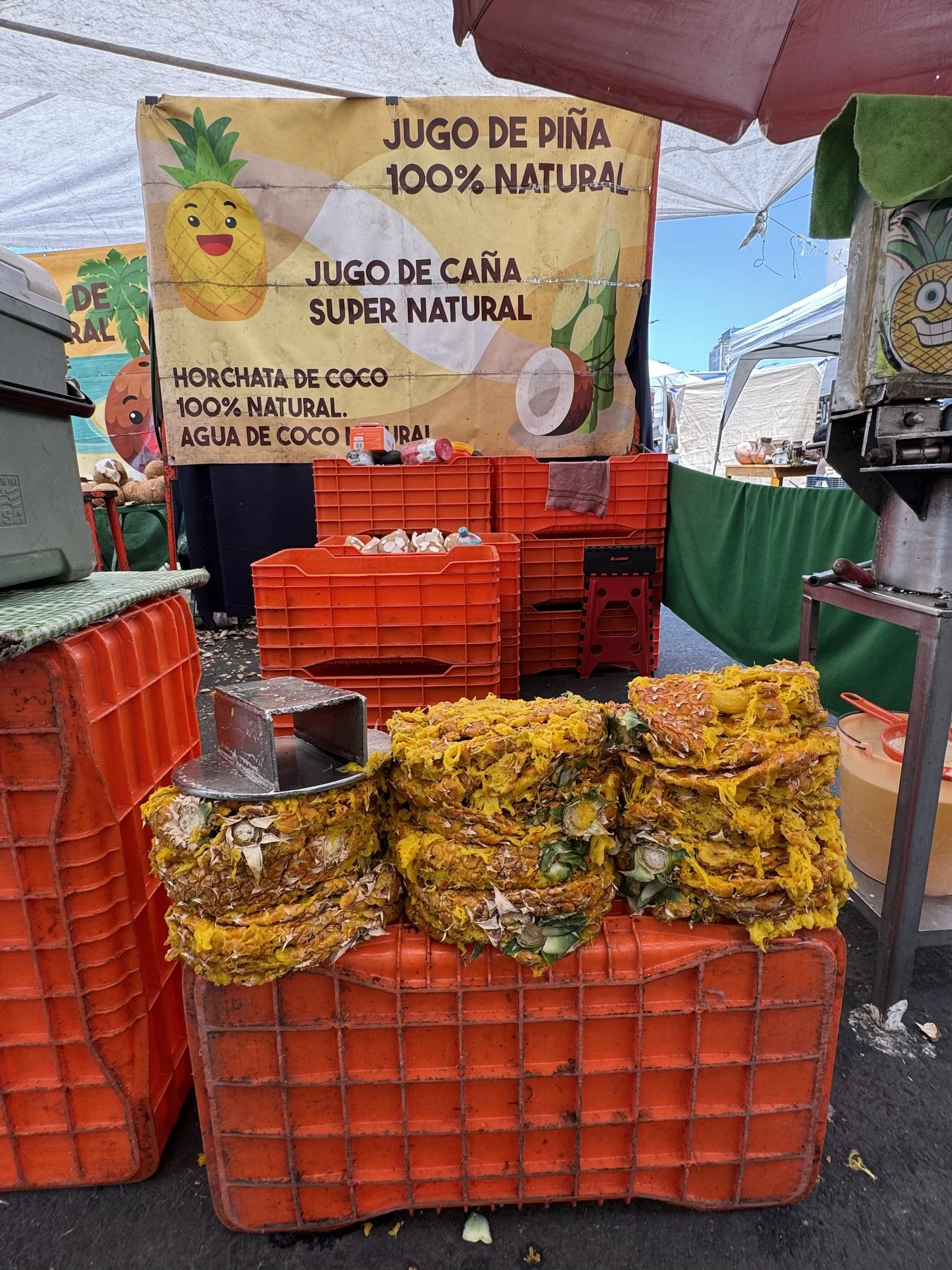
There’s plenty of street food here. I devoured a massive elote (grilled Mexican street corn), practically a meal unto itself. Then I cooled down with a fresh-pressed pineapple juice. You can't miss the giant juice stand—just look for the huge stacks of flattened, discarded pineapples.
Markets have been held in La Lagunilla for centuries. On Sundays, the neighborhood becomes an unforgettable spectacle. It’s one of the best places to experience Mexico City's vibrant culture and entrepreneurial spirit.
Keep in Mind:
You'll often read warnings about La Lagunilla telling you to "be careful," "it's dangerous," or "watch your belongings."
I felt completely safe during my visit.
As in any crowded market, use common sense. Be aware of your surroundings, take normal precautions, and only go if you're comfortable navigating a lively, chaotic, gritty neighborhood.
But don't let fear keep you away.
A few tips:
Don't carry your phone or wallet in your back pocket (good advice anywhere).
I wore my backpack the entire time, but if you're concerned, wear a crossbody bag or carry your backpack in front.
Many vendors dislike having their photo taken. Always ask first—don't try to sneak a picture.
In general, I found it was fine to photograph merchandise. If you're unsure, smile, ask, and strike up a conversation. Most vendors are friendly.
Arrive in the morning—around 10 a.m. is ideal. You’ll beat the crowds and the midday sun, and get a first look at the day’s treasures.